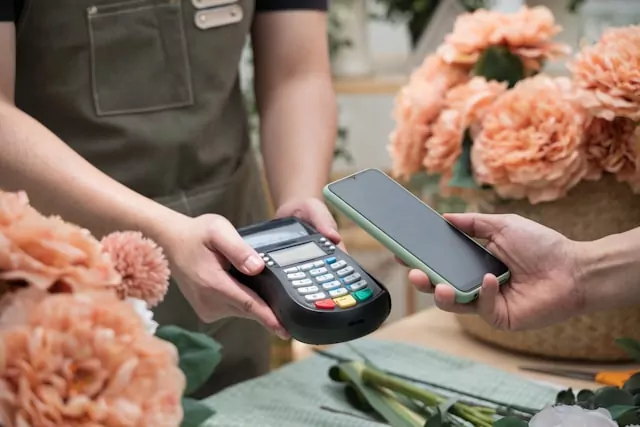
At what point does a loyalty program stop being a loyalty program, and become something your current feedback metrics can’t explain?
The punch-card era is long gone, of course. But the shift we’re talking about goes deeper than digital point trackers and mobile apps. Brands like Walmart, Target, Best Buy, DoorDash, and Amazon have rebuilt their loyalty architectures around a fundamentally different premise: instead of rewarding customers for past spending, they’re charging customers upfront for an ongoing benefits relationship.
That’s not a loyalty program. That’s a membership and that’s a subscription.
And this convergence — between the loyalty model and the subscription model — has profound implications for how organizations need to think about feedback, research, and the voice of the customer.
Why traditional loyalty tracking won’t cut it
Here’s the problem: most teams are still measuring a subscription-era program with transactional-era tools.
Walk into most loyalty departments today and ask how they’re tracking member health, and you’ll find instruments designed for the old model — redemption rates, point issuance volumes, maybe an annual satisfaction survey blasted to the full member base with no segmentation by engagement level or lifecycle stage.
The same metrics that made sense when loyalty was passive and free make much less sense when customers are paying a monthly or annual fee and making a conscious renewal decision every year.
Consider Walmart+. A member paying $12.95/month isn’t passively accumulating points — they’re evaluating every month whether free delivery, fuel discounts, and Paramount+ access justify the charge on their credit card statement. That’s a subscriber mindset, not a loyalty mindset. Measuring their experience with a once-a-year NPS survey misses almost everything that actually drives their renewal decision.
What subscription dynamics demand from feedback programs
The subscription model teaches brands a hard lesson: the moment a customer stops feeling like they’re getting value is not the moment they cancel — it’s weeks or months earlier. By the time non-renewal shows up in your behavioral data, the decision is already made.
This creates an urgent case for a different kind of listening — one built around three things traditional loyalty research rarely delivers.
1. Map key touchpoints to the customer lifecycle
A member’s mindset in week two looks nothing like their mindset in week forty-eight, right before renewal. Feedback at enrollment captures excitement and intention. Feedback at the 60-day mark — when novelty has worn off and habit has either formed or hasn’t — captures something far more predictive. Feedback 30 days before renewal captures the actual decision calculus. Most organizations aren’t asking at these moments. They’re asking whenever their survey cadence happens to land, which means the timing is almost never right.
Take the hotel industry. Hilton Honors and Marriott Bonvoy have both moved toward delivering immediate benefits — complimentary breakfast, room upgrades on arrival — rather than making members wait for elite status.
Without feedback triggered at the first stay post-enrollment, brands have no way of knowing whether those immediate benefits are actually landing, or whether the member’s first experience matched what was promised when they signed up.
2. Segment customers by engagement behavior
According to The Bond Loyalty Report™, the average consumer holds 19 loyalty memberships but actively participates in fewer than half. That means any given program has a wide spectrum of engagement sitting inside it — from weekly power users to technically-enrolled members who haven’t thought about the program since signup. Aggregating feedback across that spectrum produces noise, not insight.
A DoorDash DashPass subscriber who orders four times a week has a completely different experience than one who signed up during a promotion and has used the benefit twice. Treating their feedback the same way — or worse, averaging it together — obscures the very signals that predict churn. Engaged members, dormant members, and recent enrollees require separate research tracks.
3. Churn-predictive analytics
This is the capability most loyalty teams don’t have at all. In subscription businesses, the best operators build explicit research programs designed to catch pre-churn signals — attitudinal shifts that precede lapse behavior.
Declining perceived value scores. Reduced benefit awareness. “Have you considered switching?” responses trending the wrong way. These signals live in survey data. They don’t live in transaction logs, because disengaged members often continue transacting while mentally checking out. By the time behavior changes, the intervention window has already narrowed.
Two critical blind spots in subscription loyalty research
Two additional research opportunities are consistently underinvested in subscription-loyalty programs.
The first is upgrading conversion. For brands running freemium structures — Target Circle feeding into Circle 360, Amazon’s free tier flowing into Prime — converting members upward is a primary business objective.
Yet most organizations don’t systematically ask free-tier members what would tip the decision. The factors that drive upgrade intent (benefit awareness, perceived value gap, price sensitivity) are all measurable through targeted research. They just rarely get measured.
The second is research on lapsed members. Members who didn’t renew have already made the decision your entire retention program exists to prevent — which means they have uniquely honest opinions about why.
In competitive verticals like food delivery, where DashPass, Instacart+, and Uber One are all chasing the same subscriber, understanding exactly why someone left is competitive intelligence. It shapes benefit design, onboarding, and messaging in ways that win-back campaigns alone never will.
How Alchemer helps you close these gaps
Building a feedback program sophisticated enough to match a subscription-loyalty model requires more than a just survey tool. It requires the ability to collect feedback across every member touchpoint, make sense of it quickly, and route it to the teams who can act — before the renewal window closes.
That’s exactly what Alchemer is built to do.
Collect feedback — everywhere
Reaching members where they are — and asking the right questions at the right moment — starts with omnichannel collection. Alchemer Survey enables targeted, personalized surveys triggered by lifecycle events: post-enrollment, mid-membership, 30 days pre-renewal, or immediately after a benefit is used (or goes unused).
Alchemer Digital extends that reach in-app and in-product, capturing feedback from members in the moments that matter most, without waiting for them to respond to an email. Together, they replace the blunt instrument of an annual survey blast with continuous, segmented signals that reflect the actual diversity of your member base rather than flattening it into an average.
Find clarity and cut through the noise
Collecting feedback is only valuable if you can make sense of it fast enough to act. Alchemer Dashboard uses AI to surface patterns in real time, giving teams a clear view of member sentiment across segments, lifecycle stages, and benefit categories. Instead of manually digging through data, teams can instantly spot declining satisfaction in specific cohorts — before it turns into churn.
Alchemer Pulse applies AI-driven text analysis to open-ended feedback, continuously tracking sentiment and emerging themes over time. It turns unstructured, in-their-own-words feedback into a clear signal. That signal doesn’t just show where members are today — it reveals where they’re heading. For subscription-loyalty programs, where renewal decisions build gradually, that forward-looking signal is often more valuable than any single metric.
Act on insights
Insight without action is just overhead. Alchemer Connect automates the routing of feedback to the people best positioned to respond — a pre-churn signal goes to the retention team, a benefit awareness gap goes to marketing, an onboarding issue goes to the program design team.
And because Alchemer integrates with the CRM, CDP, and marketing automation platforms loyalty teams already use, that routing happens within existing workflows rather than creating new ones. The right information reaches the right person within the window where intervention is still possible.
Running a Quick Service loyalty program in 2026? Cost-of-living pressures are reshaping how diners think about value, and which brands they return to. Our new 2026 Quick Service Restaurant Study: Winning the Cost-Conscious Diner breaks down what’s driving those shifts and what operators can do about it.