All-in-One Employee Experience Platform
Employee experience (EX) is the sum of an employee’s interactions and perceptions throughout the employee lifecycle, from recruiting and onboarding through development, retention and departure. An employee experience platform is software that helps HR and People teams collect employee feedback across the employee lifecycle, analyze employee sentiment, and act on what they learn to improve engagement, productivity, and retention.

What Is Employee Experience?
What is EX?
Employee experience (EX) is the sum of an employee’s perceptions across every interaction with their employer, from recruiting and onboarding through development, performance, and departure. Employee experience covers the physical workspace, the tools people use, the manager relationship, the culture, and the day-to-day processes that either help employees do good work or get in the way.
Employee experience is a wider frame than most HR programs use. It includes the recruiter who never followed up, the laptop that took two weeks to arrive, the approval workflow with four unnecessary steps, and the manager who runs a genuinely good one-on-one.
That breadth is why employee experience shows up in business results. Employees who can do their jobs without friction produce more, stay longer, and treat customers better. Employees fighting their own tooling and processes disengage first and leave second.
The Employee Lifecycle in Six Stages:
Every stage creates an opportunity to collect employee feedback. Employee listening programs connect those signals across the lifecycle, helping HR teams understand not only how employees feel, but which experiences may be contributing to those perceptions. Onboarding surveys, pulse surveys, engagement surveys, developmental feedback and exit surveys each reveal a different part of the employee experience.
| Stage | What Employees Are Doing | What Shapes Their Experience |
|---|---|---|
|
Attraction and hiring |
Evaluating you as an employer |
Employer brand, candidate communication, interview process |
|
Onboarding |
Learning the role and the culture |
Time to productivity, clarity of expectations, early manager support |
|
Development |
Building skills and a career path |
Training quality, growth visibility, internal mobility |
|
Performance and recognition |
Doing the work and being evaluated |
Feedback quality, fairness, whether good work is noticed |
|
Retention and wellbeing |
Deciding whether to stay |
Workload, manager relationship, belonging, flexibility |
|
Offboarding and alumni |
Leaving and talking about it |
Exit process, dignity of departure, referral and rehire likelihood |
Employee Experience vs. Employee Engagement
Employee Experience vs. Employee Engagement
Employee engagement is how committed and motivated employees feel toward their work and organization. Employee experience is the full set of interactions, tools, processes, relationships and workplace conditions that can shape those perceptions. Engagement is an outcome you measure. Experience is the system you design. An employee engagement survey is one input into a broader employee experience strategy.
This distinction matters practically, not just semantically. An engagement score tells you the temperature. It doesn’t tell you where the draft is coming from. Employee feedback helps uncover the experiences behind the score so HR teams know where to investigate and act.
Engagement surveys remain valuable because consistent measurement can provide a trend for how employee perceptions change over time. They just work far better as one part of a broader employee listening program that also captures feedback at important moments throughout the employee lifecycle.

| Employee Engagement | Employee Experience | |
|---|---|---|
|
What it is |
An outcome: commitment, motivation, discretionary effort |
A system: every interaction, tool, process, and relationship at work |
|
What it answers |
How do our people feel? |
Why do they feel that way, and what can we change? |
|
Typical measurement |
Annual engagement survey, eNPS, engagement index, targeted pulse surveys |
Lifecycle surveys, pulse surveys, onboarding and exit feedback, always-on employee listening |
|
Cadence |
Annual or semi-annual |
Continuous, triggered by lifecycle events |
|
Owner |
HR, reported to leadership |
HR plus IT, Facilities, Operations, and every people manager |
|
Risk when isolated |
You measure the score and can’t move it |
You improve processes without knowing whether people noticed |
Why Employee Experience Matters
Employee experience matters because it can influence employee retention, employee satisfaction, organizational culture, productivity, employer branding, employee wellbeing, and overall business performance. Organizations that measure and act on employee feedback across the lifecycle reduce avoidable turnover, ramp new hires faster, and spend less on recruiting.
Employee Retention
Employee feedback can surface patterns related to workload, manager support, onboarding, career development and other aspects of the employee experience that may affect an employee’s decision to stay. Onboarding check-ins, pulse surveys and lifecycle feedback give HR teams additional opportunities to identify and investigate those issues before an exit survey.
Employee Satisfaction
Satisfaction is the leading indicator sitting in front of retention. Measured on a real cadence and paired with visible follow-through, it tells you where the experience is drifting while you can still correct it.
Organizational Culture
Culture is what people actually experience, not what's written on the wall in the lobby. Lifecycle feedback tells you whether the stated values and the lived ones match, and where they've come apart.
Productivity
Friction compounds quietly. A clunky approval process, a training gap, unreliable tool, or an unclear expectation can make it harder for employees to. Do their jobs effectively. Employee feedback surfaces those costs so someone can re-investigate and address them.
Employee Wellbeing
CLV compounds. A customer who stays two extra years at a higher tier is worth more than three new logos that churn in month eight, and costs a fraction as much to keep.
Employer Brand
Employees shape how prospective hires perceive an organization through referrals, reviews, professional networks, and everyday conversations. Understanding employee experience can help organizations identify gaps between the employer brand they communicate externally and the experience employees report internally.
Key Features of an Employee Experience Platform
An employee experience platform helps organizations collect, analyze and act on employee feedback throughout the employee lifecycle. Key capabilities can include employee engagement and pulse surveys, lifecycle feedback, AI-powered analysis, reporting, action planning, workflow automation and integrations with HR and workplace systems. Employee experience platforms vary in scope, from focused employee survey tools to broader systems designed to support continuous employee listening across multiple lifecycle stages.
| Capability | What It Does for Your Program |
|---|---|
|
Employee engagement surveys |
Core measurement of engagement, satisfaction, and culture with consistent methodology so trends hold up year over year |
|
Employee feedback collection |
Reach every employee wherever they work — email, web, SMS, kiosks — including frontline and deskless teams who never open a corporate email |
|
Pulse surveys |
Short, frequent check-ins on a single topic. Five to 10 questions, under five minutes, monthly or quarterly to avoid survey fatigue |
|
Lifecycle surveys |
Automated 30-60-90 onboarding check-ins, development and training feedback, manager assessments, and exit surveys |
|
Always-on listening |
Continuous feedback channels rather than one annual event, so issues surface when they emerge |
|
AI-powered analytics |
Automatic theme detection and sentiment analysis across open-text responses, which is where the actionable detail lives |
|
Dashboards and reporting |
Segment and filter by team, region, tenure, and role; compare results and track trends over time |
|
Action planning |
Turn findings into owned commitments with deadlines, then measure whether the next survey moved |
|
Manager reporting |
Role-based views so each people manager sees their own team’s results with appropriate anonymity thresholds |
|
Benchmarking |
Internal comparison across teams and time periods, plus external context where available |
|
Workflow automation |
Trigger surveys from HRIS events, alert stakeholders on at-risk responses, and launch follow-up surveys automaticall |
|
HRIS and workplace integrations |
Connect to your HRIS, ITSM, payroll, and collaboration tools so employee data flows in and feedback flows out |
The capability that separates programs that work from programs that produce reports is workflow automation tied to HRIS events. When a hire, promotion, transfer, or termination in your HR system automatically triggers the right survey, listening becomes part of the operating rhythm instead of a project someone has to remember to run.

How to Close the Employee Feedback Loop
Employee survey programs die from one cause: employees answer honestly, nothing visibly changes, and the next survey gets a 40% response rate. Every subsequent survey gets worse, and eventually HR concludes people don’t want to give feedback.
Closing the loop reverses that. It takes four things:
- Report back quickly. Share top-level results within weeks, not quarters. Include the uncomfortable findings, because omitting them is the fastest way to lose credibility.
- Name owners. Identify who is responsible for evaluating or acting on priority themes and establish appropriate next steps and timelines.
- Say what changed. A short “you said, we did” update after each cycle does more for participation than any incentive.
- Measure whether it worked. Ask again. If the score didn’t move, the action plan was wrong, and that’s useful information too.
Survey participation rates are the honest scoreboard for a listening program. When employees have seen their feedback change something before, they answer the next survey.
What to Look for in an Employee Experience Tool
Most employee experience tools are built around a fixed engagement survey methodology. That’s convenient in year one and constraining by year three, when you want to ask something the vendor’s model doesn’t support. Here’s what to evaluate.
| Consideration | What to Look For |
|---|---|
|
Ease of use |
HR can build, edit, and launch surveys without IT tickets or a vendor services engagement |
|
Enterprise scalability |
Multi-team, multi-brand, multi-region support with centralized governance, SSO, and audit trails |
|
Enterprise security |
SOC 2 Type II, GDPR and CCPA compliance, SSO, role-based permissions, and anonymity controls that employees can trust |
|
Customization |
Your questions, your logic, your branding — not a locked template with a vendor’s engagement index bolted on |
|
AI-powered insights |
Sentiment and theme analysis across open-text at scale, with human review kept in the loop |
|
Dashboards and reporting |
Role-based views, cross-channel reporting, and drill-down from a trend to an individual customer response |
|
Integrations |
Native HRIS connections and event triggers, plus open API for anything the library doesn’t cover |
|
Workflow automation |
Lifecycle surveys that fire from HR system events, alerts on at-risk responses, automated follow-ups |
|
Customer support |
Named CSMs, onboarding coaching, and program guidance rather than a ticket queue |

Alchemer delivers on every one of these. The integration suite is enterprise-grade, with deep Salesforce and Microsoft Excel bi-directional sync and a workflow automation engine that routes satisfaction data into 400+ systems your teams already use. AI text analytics and conversational assistants are built in. SOC 2 Type II certification and GDPR-compliant infrastructure come standard. And with the recent acquisition of Chatmeter, Alchemer is one of the only platforms that unifies structured CSAT data with unstructured review and reputation signals — giving CX leaders, support teams, and multi-location operators a single source of truth for the customer voice.
Comparing Employee Experience Platforms
Employee experience vendors cluster into three approaches, and the right choice depends on which problem you’re actually solving.
- Methodology-led platforms (Culture Amp, Perceptyx, Workday Peakon) ship a research-backed engagement model and benchmark database. Strong out of the box, harder to bend when your questions fall outside the framework.
- Enterprise XM suites (Qualtrics, Medallia) cover employee and customer experience at scale, with the implementation timelines and cost structures that come with that scope.
- Flexible feedback platforms (Alchemer) give you full control over survey design, logic, and workflow, connected to your HRIS, without a fixed methodology or a multi-quarter rollout.

| Category | Alchemer | Medallia | Qualtrics | QuestionPro | SurveyMonkey |
|---|---|---|---|---|---|
|
Core Feedback Capabilities |
Collect and connect omnichannel feedback including surveys, digital channels, listings, and ratings & reviews without heavy setup. |
Full CX suite with advanced analytics and broad reach, but high complexity. |
Enterprise-scale XM across CX/EX, high complexity. |
Mid-market survey and CX features for quick wins. |
Basic surveys with limited logic and scale. |
|
Analytics & AI |
Customizable dashboards, role-based reporting, AI text analysis, and AI conversational assistants. |
Powerful analytics that risk overwhelming non-technical users. |
Deep analytics with high implementation costs and requirements. |
Basic analytics with limited depth. |
Slower, limited analytics. |
|
Ease of use |
Fast, flexible setup, fewer IT dependencies, and flexibility for both simple and sophisticated programs. Fast time to value. |
Steep learning curve and manual workflows. |
Heavy implementation, often requires third parties. |
Easier interface but faces admin limitations |
Simple for beginners, lacks enterprise readiness. |
|
Support & Service |
94 NPS with accessible, hands-on success teams who stay with you post-launch. |
Restricted support hours; extra charges for enhanced support. |
Slow response times; most support tiers require additional cost. |
Limited collaboration support. |
Basic support without CX program guidance. |
|
Integrations |
Unlimited integrations at all tiers with fast deployment. |
Solid integrations but with complex setup. |
Fewer out-of-box integrations; added cost and long timelines. |
Limited integration options. |
BI integrations for top tier only. |
Employee Experience Success Stories
Employee listening looks different in a 16,000-person HCM provider than it does across 150 senior living communities. What these programs share is a move from collecting feedback to acting on it.
- Choose a story below
StoryPoint Group
When customers experience friction and you’re not listening, you don’t find out until they churn. Post-interaction feedback is the backbone of any CX program — and that window right after a purchase, support ticket, or onboarding is your best chance to catch problems before they compound. Alchemer lets CX teams capture CSAT, NPS, and CES automatically and route low scores to the right team members for immediate follow-up, turning feedback into action before it’s too late.

With Alchemer, StoryPoint automated collection and reporting across every community, cutting reporting time from weeks to days and giving regional and local leaders real-time visibility into resident and family satisfaction. Instead of reviewing what happened last month, teams now act on what’s happening now — turning satisfaction data into continuous, location-level experience improvements.
Key Outcome: Real-time customer feedback reporting replaced manual processes, enabling faster response to satisfaction issues across more than 150 communities.
Paychex
Paychex’s Learning and Development team supports training for 16,000 global employees and needed a more flexible way to evaluate program effectiveness and learner feedback.

Before Alchemer, the L&D team ran training evaluations with tools whose limited question types and reporting produced incomplete data. With Alchemer, Paychex built customizable evaluations that capture instructor effectiveness, content quality, learner sentiment, and confidence, then export into Smartsheet for senior leadership dashboards. Onboarding feedback loops help ensure new hires arrive prepared and supported, which supports retention directly. What started in L&D expanded across the company to user experience research and client education, and the relationship has run since 2008.
Why Organizations Choose Alchemer for Employee Experience
HR teams come to Alchemer for six jobs: collect employee feedback, build customizable surveys, automate workflows, analyze employee sentiment, deliver actionable insights, and integrate with the HR technology they already run. Here’s what handles each one.
Collect Employee Feedback Anywhere
Send surveys by email, web link, SMS, kiosk, and QR code so frontline, hybrid, and deskless employees are included instead of underrepresented. Multilingual support and built-in translation mean one survey covers a global workforce without duplicate versions.
Build Customizable Surveys
40+ question types, answer piping, branching paths, and skip logic, all in a drag-and-drop builder. Start from a pre-built template, or build your own and save it as a template for every team. You design the program; the platform doesn't design it for you.
Automate Workflows
Trigger surveys from events in your HR systems. For example, a new hire fires the 30-60-90 onboarding sequence, a termination fires the exit survey routed to HR and the manager's leader, a promotion fires a development check-in. Responses that flag risk can alert stakeholders and launch follow-up surveys automatically.
Analyze Feedback at Scale
Alchemer Pulse applies purpose-built AI to open-text responses, assigning sentiment in context and grouping comments into clear themes. Volume and sentiment trends show what's improving, declining, or newly emerging. Washburn & McGoldrick cut open-text analysis time by more than 50% using the same capability.
Deliver Actionable Insights
Build reports and dashboards that go to leadership without manual assembly, and export cleanly into whatever reporting tool your executives already read. Paychex exports Alchemer data into Smartsheet to drive senior leadership dashboards.
Integrate With Existing Systems
Native HR workflow initiators connect to your HRIS, plus 600+ business systems and an open API for the rest. Employee data flows in, feedback flows out to the systems where work actually happens.


What Customers Are Saying About Alchemer's EX Software

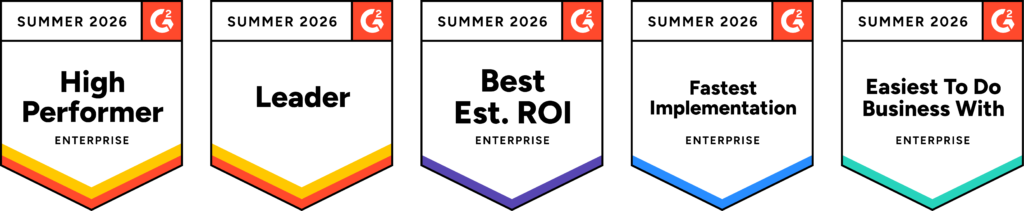

See how HR and People teams use Alchemer to collect employee feedback across the lifecycle, analyze sentiment, and give managers the insight to act — with implementation measured in days, not quarters.
Employee Experience Resources for HR and People Teams

Alchemer for Employee Experience
Boost engagement, efficiency, and satisfaction across your workforce...

Survey Software: Tools, Platforms, and Buyer's Guide
Smart thinking: you’ve decided to use a survey to gather feedback on your company’s customer experience (CX)...

Purpose-Built AI: Analyze Feedback in a Fraction of the Time
In this post, we discuss exactly how Alchemer’s AI features help teams analyze feedback in a fraction of the time...
Employee experience (EX) is the sum of an employee’s perceptions across every interaction with their employer, from recruiting and onboarding through development, performance, and departure. It includes the tools people use, the processes they navigate, the manager relationship, and the culture they work in.
An employee experience survey collects feedback about a specific stage or aspect of working at your organization. Common types include engagement surveys, pulse surveys, onboarding check-ins at 30, 60, and 90 days, training and manager feedback, and exit surveys.
A pulse survey is a short, focused questionnaire sent on a regular cadence to measure one aspect of the employee experience. Pulse surveys typically run five to 10 questions, take under five minutes, and go out monthly or quarterly. Keeping the questions consistent is what makes the trend line meaningful; running them too frequently causes survey fatigue.
Employee Net Promoter Score (eNPS) measures whether employees would recommend your organization as a place to work, using a 0–10 scale. Subtract the percentage of detractors from the percentage of promoters. It works best as a consistent anchor metric inside engagement and pulse surveys rather than as a standalone program.
Organizations can collect employee feedback through channels such as email, web surveys, mobile-friendly forms, SMS, QR codes and kiosks. The right channel depends on where employees work and how they access company communications. Employee feedback can also be collected at lifecycle moments such as onboarding, promotions, training, organizational changes, and departures, with HRIS integrations used to automate these workflows were appropriate.
Run a full engagement survey annually or twice a year with consistent questions, and supplement with shorter pulse surveys monthly or quarterly. Cadence matters less than the organization’s ability to act between cycles. Surveying more often than you can respond damages participation.
Employee feedback software collects, analyzes, and routes feedback from employees. Core capabilities include flexible survey building, multichannel distribution, HRIS-triggered automation, AI sentiment and theme analysis, segmentation and manager reporting, and integrations with the HR systems where work happens.
Employee feedback integration connects your feedback platform to the systems you already run. HRIS integrations trigger surveys automatically from events like a new hire, promotion, or termination. Collaboration and ITSM integrations push alerts and follow-up tasks to the people who need to act. Reporting integrations move results into the dashboards leadership already reads.
Collect feedback early and often enough to see risk before it becomes resignation: onboarding check-ins at 30, 60, and 90 days, pulse surveys that segment by team, and exit surveys that identify patterns. Route at-risk signals to managers with the authority to act, and close the loop so employees see that speaking up produces change.
Collect feedback early and often enough to see risk before it becomes resignation: onboarding check-ins at 30, 60, and 90 days, pulse surveys that segment by team, and exit surveys that identify patterns. Route at-risk signals to managers with the authority to act, and close the loop so employees see that speaking up produces change.
Employee surveys can be anonymous or confidential, depending on how the program is designed. Anonymous surveys usually produce more candid feedback on sensitive topics. Confidential surveys, where responses are identified but access is restricted, allow follow-up with individuals. Alchemer supports both, with anonymity thresholds that prevent manager-level reports from exposing individual responses in small teams.
Culture Amp and Perceptyx lead with a fixed engagement methodology and external benchmark database, which is strong out of the box and harder to adapt. Workday Peakon is strongest for organizations already standardized on Workday. Qualtrics and Medallia offer enterprise breadth with the implementation timelines and costs that come with it. Alchemer gives HR teams full control over survey design, logic, and lifecycle automation, connected to existing HR systems, with implementation measured in days.
Yes. Alchemer is SOC 2 Type II certified and supports GDPR and CCPA, with role-based permissions, SSO, retention controls, and anonymity settings appropriate for sensitive HR data.
Most teams launch within days using pre-built templates, with onboarding coaching to configure lifecycle automation and HRIS triggers. Paychex reports that new users become proficient quickly, which is a large part of why the platform spread beyond L&D.
Look for employee experience software that supports flexible survey design, multichannel feedback collection, lifecycle surveys, analytics, reporting, workflow automation, appropriate security controls, and integrations with the HR and workplace systems your organization already uses. The right platform should fit both your current employee listening program and how you expect it to evolve
Employee engagement describes how committed, connected and motivated employees feel. Employee experience is the system that produces that outcome, covering every interaction and condition at work. An employee engagement survey measures engagement, while an employee experience program looks more broadly at the experiences that may influence it.
An employee experience platform is software that collects employee feedback across the employee lifecycle, analyzes it, and routes insight and action to HR and people managers. Platforms typically include engagement surveys, pulse surveys, lifecycle surveys, AI-powered analytics, manager dashboards, action planning, workflow automation, and HRIS integrations.
Employee experience software helps organizations measure and improve how employees experience work. It differs from a basic survey tool by automating lifecycle surveys from HR system events, analyzing open-text at scale, and giving each manager visibility into their own team’s results.