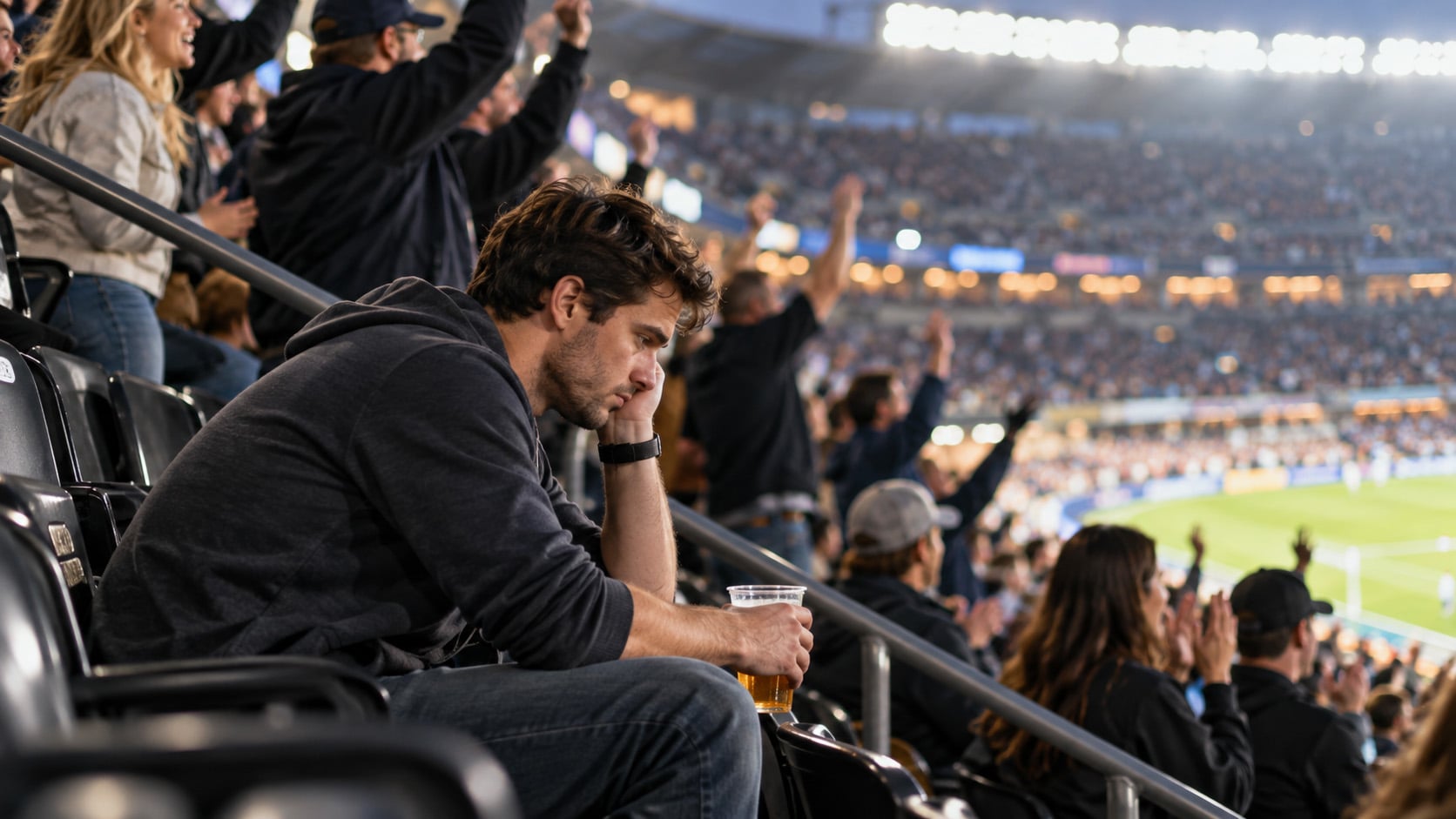
Every venue has a feedback program on paper. The 2026 data shows how many fans that program never reaches, and how few see their input lead anywhere.
According to Alchemer’s 2026 Fan Experience Report Card, 35.8% of fans say they’ve never been asked for feedback by the venue or team they visited. Among fans who did respond, 73.2% received an acknowledgment, but only 28.5% saw a visible change on a later visit. Fan feedback earns the lowest grade in the study: a C.
TL;DR — key takeaways
- 35.8% of fans have never been asked for feedback, per Alchemer’s 2026 Fan Experience Report Card.
- When asked, 70% of fans respond.
- 73.2% get an acknowledgment after giving feedback, but only 28.5% see visible change, a 45-point gap.
- 66% have had a frustrating experience at a venue and chose not to report it.
- Fans who were asked and didn’t respond have the lowest satisfaction of any segment: 38% rate the experience excellent.
Do venues ask fans for feedback?
Less often than they think. Per Alchemer’s 2026 data, fewer than half of fans (44.9%) have given feedback to a venue or team after an event.
| Asked for feedback after attending an event? | % of fans |
|---|---|
| Yes, and I provided feedback | 44.9% |
| Yes, but I didn’t respond | 19.3% |
| No, I’ve never been asked | 35.8% |
The encouraging part is response. Of the fans who were asked, 70% answered, which is a strong rate by any standard. Fans will participate. More than a third of the fan base never got the invitation.
What happens after fans give feedback?
Usually an acknowledgment. Rarely a visible change.
| What happened after giving feedback | % of fans |
|---|---|
| Acknowledgment that my feedback was received | 73.2% |
| A follow-up response from the venue or team | 42.7% |
| A visible improvement or change on a later visit | 28.5% |
| Some form of compensation or make-good | 13.2% |
| Nothing | 6.9% |
Sports venues do well on the first two rows. Acknowledgment and personal follow-up both beat the benchmarks Alchemer sees across most other industries. The drop comes at visible change: a 45-point gap between telling fans you heard them and showing them something improved.
What is closed-loop feedback?
Closed-loop feedback means capturing feedback, acting on it and then telling the person what changed as a result. At a venue, that looks like a fan reporting a slow entry gate, the operations team adding staff and a “you asked, we fixed it” message reaching the fan before the next home game.
Close the loop before the next home game. Alchemer Connect routes fan feedback to ticketing, operations and guest services, triggers service-recovery workflows and follows up with the fan automatically. Explore Alchemer for Sports and Venues →
What happens when fans don’t report bad experiences?
Silence hides churn. 66% of fans have had a frustrating experience at a venue and chose not to report it. Of that group, 32% said reporting it was too much effort and 19% attended less often instead.
Fans who were asked and didn’t respond, 19% of the total, send the clearest warning in the dataset. Only 38% rate their experience excellent, compared with 68% of fans who gave feedback. And 41% of that silent group has posted something negative in public, against 10% of feedback-givers. A non-response looks like no signal. The data says it’s the strongest one.
When and how should venues ask fans for feedback?
Match the timing to the moment. Fans split between a few days later (32.3%), right after the event (31.2%) and in real time during the event (15.4%). Only 12.7% don’t want to be asked at all.
The channels fans prefer are ones teams already own: post-event email (57%), in-app prompts (46%) and in-venue QR codes (26%). All three beat public reviews (17%) and social posts (16%), and that order is worth protecting. A complaint in your inbox arrives with context and a chance to fix it. The same complaint on Google arrives with an audience. The full report card maps each timing preference to the type of question it fits best.
Want the full report? Download the complete 2026 Fan Experience Report Card for Sports Venues and Teams for the complete feedback benchmarks, the silent-fan segment data and a step-by-step plan to raise the C.
Methodology: Alchemer surveyed 1,064 U.S. fans who attended a professional or college sporting event in the past 12 months. The 2026 study covers ticket value, venue experience, technology and fan feedback.
FAQ
Q: How many sports fans have been asked for feedback?
A: 64.2% have been asked by the venue or team they visited, while 35.8% say they’ve never been asked, according to Alchemer’s 2026 Fan Experience Report Card.
Q: Do venues act on fan feedback?
A: Not visibly enough. 73.2% of fans who gave feedback received an acknowledgment, but only 28.5% saw a visible change on a later visit.
Q: When should venues ask fans for feedback?
A: Fans prefer a few days after the event (32.3%) or right after it (31.2%), and 15.4% are open to real-time prompts during the event, per Alchemer’s 2026 data.
Q: What is closed-loop feedback for sports venues?
A: Capturing fan feedback, acting on it and telling fans what changed, such as a “you asked, we fixed it” message before the next home game.