- Resource Library
- Research Report
- Every Fan Moment Counts: The Connected Feedback Playbook for Sports Venues
Every Fan Moment Counts: The Connected Feedback Playbook for Sports Venues
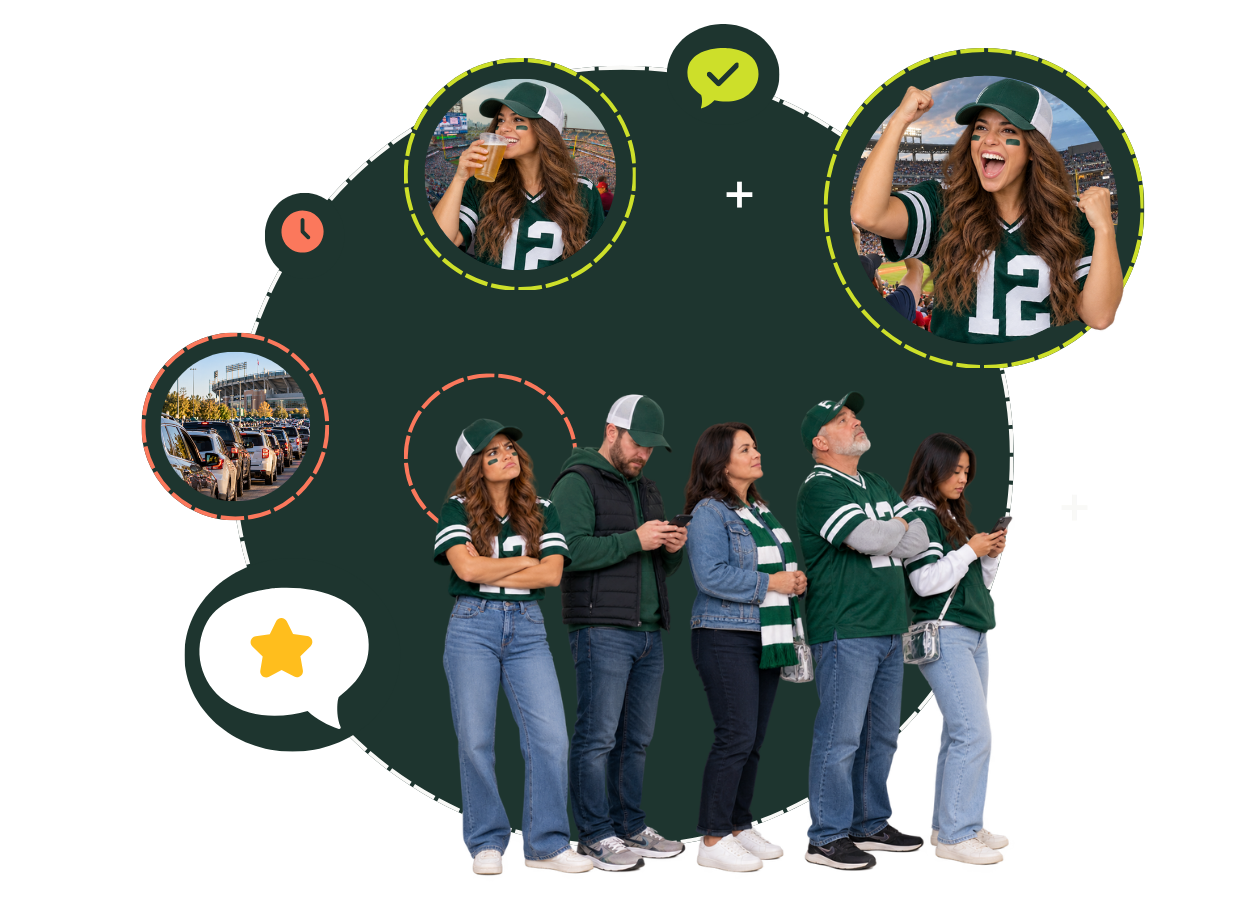
Fans are keeping their own score on game day. Here’s how to see the experience scorecard, close the gaps, and keep fans coming back.
Introduction
Fans will sit through a losing season. A bad experience at the venue is harder to forgive. In Alchemer’s 2026 Fan Experience Study, 68% of frequent attendees say they’re more forgiving of team’s poor performance than of a poor experience at the venue. Only about 11% would forgive the reverse.
That puts game day on a scoreboard, and fans keep score themselves. They count the minutes in the security line, the price of the beer and the wait at the restroom during halftime. Most of them never tell you the score, unless you ask.
This guide is for the teams who own game day: venue operations, guest services, ticketing and fan engagement. It follows the path from a fan’s experience to a fix they can see, shows the four places that feedback loops break and lays out one fan feedback program that repairs each of those breaks:
- Ask every fan at the moment that fits, through channels you already own.
- Understand fan sentiment, in their own words, by section, game and ticket type.
- Act before a frustrated fan quietly stops coming.
- Prove what the program is worth in renewals, upgrades and per-cap spend.
Where the Fan Feedback Loop Breaks
Most teams and venues already collect fan feedback. The trouble starts between a fan’s bad experience and a fix they can see. Alchemer’s research uncovered four areas where fan feedback loops break.
| The break | What fans told us | Where to fix it |
|---|---|---|
| 1. Most fans never get asked for their score | 36% of fans don't recall ever being asked for feedback. And 66% have had a frustrating experience they never reported, with 32% of that group saying reporting was too much effort. | Ask the Right Fans at the Right Moment |
| 2. The score alone doesn't explain "The Why" | Most fans say their ticket was worth the money, yet 74% feel nickel-and-dimed by fees and upsells. A satisfaction score alone misses that contradiction. | Understand the Nuance of Fan Sentiment |
| 3. Fans get a reply, not a fix | 73% of fans who gave feedback got an acknowledgment. Only 28.5% saw a visible improvement on a later visit. | Act Before Fans Walk |
| 4. The wins never reach the front office | 43.2% of fans are considering an upgrade, and fans who couldn't find staff were 20 points less likely to recommend the venue. Few teams tie that feedback to renewals and revenue. | Prove the Impact of Feedback |
The next four sections take each break in turn.
1. Ask the Right Fans at the Right Moment
The fix for the first break is simple: ask more fans and ask them when the moment is fresh. Fans are split on timing. Some want a quick prompt during the game, some want a same-day email and some prefer a few days to reflect. Very few want to be left alone entirely.
They’re clearer about where. Post-event email is the top channel fans choose for giving feedback (57%), followed by in-app prompts and in-venue QR codes. A complaint in your inbox arrives with a name and a chance to fix it. The same complaint on Google or another review site arrives with an audience.
The Buffalo Sabres Story
The Sabres send a “Gameday Pulse” survey after every home game. Fans answer the same core questions each time, including Net Promoter Score (NPS), customer satisfaction (CSAT), intent to attend another game and word of mouth. That consistency lets leadership compare one game against the next and spot a dip while it’s still fresh.
Every survey matches the Sabres’ brand, and advanced logic serves different questions to different fan segments within a single survey. Hidden variables attach details like ticket type to each response, so the team can sort results by segment without asking fans to repeat what the Sabres already know.
Fans responded. Survey participation doubled year over year, and through the 2025-26 regular season the team gathered more than 41,000 open-ended responses. CSAT, NPS and arena atmosphere ratings all rose by double digits. As Jeremy Cohen, Manager of Fan Development & Insights, puts it, the Sabres are “collecting more fan feedback than ever without adding extra lift for the team.”

2. Understand the Nuance of Fan Sentiment
Scores tell you something went wrong. Comments can tell you what went wrong, where it happened, and why did it occur.
Value is the best example. Most fans in Alchemer’s Fan Experience Study say their ticket was worth the money. Yet 74% say the same venue nickel-and-dimes them with fees, surge pricing and upsells. A satisfaction score can’t explain that contradiction. A fan who writes “great game, but $40 to park and $14 for a beer” can.
The frustration also runs deepest where you’d least want it. Season ticket holders say they’re “constantly” nickel-and-dimed at nearly double the rate of single-game buyers. Those are the fans you’re counting on to renew, and you won’t spot the pattern unless you can sort comments by ticket type.
Alchemer Pulse analyzes open-text feedback from surveys and reviews for themes and sentiment by venue, section, game or ticket type. Your team sees what's driving the scores without reading every comment by hand.
Theme every comment by ticket type. See whether premium fans and single-game fans complain
about different things, then fix the issues that put renewals at risk first.
Track value language all season. Watch whether fee and pricing complaints rise after a price change or a new upsell.
Map complaints to the building. Tie themes like parking, entry lines and hard-to-find staff to specific gates and concourses, so fixes land in the right place.
3. Act Before Fans Walk
Here’s where sports venues already outperform most industries in Alchemer studies. When a fan gives feedback, someone usually acknowledges it, and many fans get a personal follow-up.
The drop-off comes at the fix. Alchemer’s Fan Experience Study found that 73% of fans who gave feedback heard back, but only 28.5% saw a visible improvement on a later visit. That gap is the clearest opportunity in the data. A fan who says the restroom lines were brutal and returns to find them just as brutal has learned that speaking up doesn’t help. Next time, they won’t bother.
Alchemer Connect sends feedback into the systems your teams already use, including Salesforce, HubSpot, Zendesk and Slack. With 400+ integrations, alerts fire, tasks open, and each issue reaches the person who can fix it. That person follows up, the fix happens and the fan hears about it.
You stay in control of the automation. Set rules for what routes where, and keep a person in the path for sensitive issues like refunds, accessibility and ticketing disputes.
Flag at-risk season ticket holders. A low score from a season ticket holder creates a task for their account rep in the CRM within 24 hours.
Alert guest services mid-game. A QR complaint about restrooms or lines pings guest services in Slack while the fan is still in the building.
Enrich the fan record. Feedback flows into the fan profile (for example, Salesforce Data Cloud or KORE), so experience data sits next to ticketing and spend data.
Send "you said, we did" updates. A short email before the next homestand shows fans what changed because they spoke up.
4. Prove The Impact of Feedback
A fan feedback program earns its budget when leadership can see it in renewals, upgrades and per-cap spend. That connection is easier to draw than most teams expect.
Take upgrades. In Alchemer’s recent research, 43.2% of fans said they’re considering an upgrade. Feedback tells you which of them just had a night worth building on, and when to make the offer. Or take advocacy. Fans who couldn’t find staff when they needed help were 20 points less likely to say they’d recommend the venue. That’s a staffing fix with a measurable payoff.
Alchemer Dashboard combines multiple surveys in live, shareable dashboards. Use AI-powered search assistant,Spark to build charts from plain-language questions, and use AI Highlights to point out what changed. Operations, guest services and the front office all work from the same view, without waiting on an analyst.
A renewal-risk view for executives. Show satisfaction drivers by ticket type next to upgrade and return intent.
A game-day scorecard for operations. Track entry, concessions, restrooms and staff availability game over game.
Season-over-season benchmarks. Compare your venue against yourself and other venues in similiar markets.
One Fan, One Season, One Program
Here’s how Survey, Pulse, Connect and Advanced Dashboard work together across a single season ticket holder’s year.
- Pre-season (Survey). Maria, a five-year season ticket holder, gets a short renewal-readiness survey. She rates her intent to renew a 6 out of 10.
- Game day (Survey + Connect). At the third home game, she scans a QR code at Gate C to report a 20-minute security line. Guest services get a Slack alert, and operations adds a lane at that gate before the next game.
- Post-game (Pulse). Her open-text comment, “parking chaos again, and $14 for a beer,” lands in the parking and value themes alongside hundreds of similar comments.
- Follow-up (Connect). Her account rep gets a CRM task, calls within a day and offers a parking pass for the next homestand. A “you said, we did” email follows, noting the new security lane.
- Renewal window (Advanced Dashboard). The executive dashboard shows that season accounts with parking complaints renew below average. That makes the case for the parking investment and season ticket holders are informed of the improvements. Maria renews.
Questions to Ask Any Feedback Platform
Bring these to every demo.
- Can we collect feedback by email, in-app, QR code and in person from one platform?
- Can we time surveys to specific moments, like right after a service failure?
- Does open-text analysis break results out by theme, sentiment, section and ticket type automatically?
- Which of our systems does it integrate with, including our CRM, ticketing and team chat?
- Can we start with one survey and scale without re-platforming or a services-heavy rollout?
- Is the platform SOC 2 compliant, and is our data ever used to train third-party AI models?
Want a side-by-side view? The Feedback Platform Comparison Guide compares leading platforms on ease of use, AI features, integrations, and more.
Fill Stadiums and Win Gameday
Fans forgive a losing season faster than a bad game day. They’ve already told you what would bring them back more often: a price they can predict, less time waiting, help when they need it and proof that their feedback went somewhere.
The venues that ask every fan, listen to what they mean, act before they walk and prove the results will keep those fans through the down years and the playoff runs.
Book a fan feedback program assessment. We’ll look at how your venue collects, analyzes and acts on fan feedback today, and map the fastest path to a program that pays for itself.
Related Resources
The 2026 Stadium Scorecard
What 6,238 fan reviews reveal about America’s top sports venues.
Read the report

The Buffalo Sabres Story
With Alchemer, the Sabres gain a clear, real-time view of what fans care about most.
Read the full story

Fans are keeping their own score on game day. Here’s how to see the experience scorecard, close the gaps, and keep fans coming back.