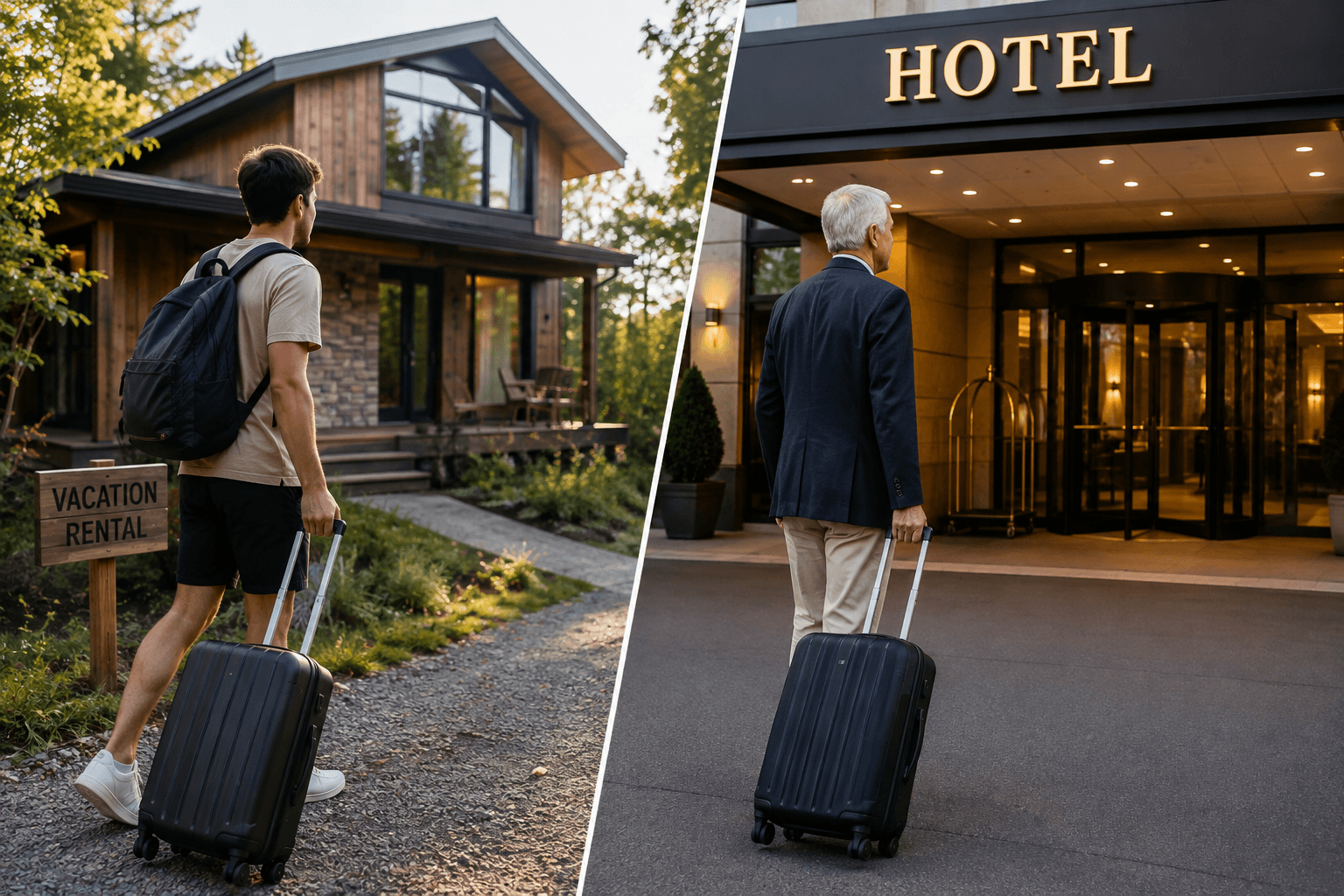
A 28-year-old and a 68-year-old can book the same property and be on two entirely different journeys. They found it differently, they’ll judge it differently, and they’ll leave for different reasons. Designing one experience for both means doing neither one well.
According to Alchemer’s 2026 Hospitality Benchmark Study, 87% of travelers aged 30–44 read reviews before booking, compared with just 59% of those 61 and older. That single divide reshapes discovery, expectations and loyalty across the entire guest journey.
TL;DR — key takeaways
- 87% of 30–44-year-olds read reviews before booking vs. 59% of travelers 61+, per Alchemer’s 2026 Hospitality Benchmark Study.
- Younger travelers are operations-driven: check-in speed and support top their priorities.
- Older travelers are comfort- and place-driven: room comfort and location matter most.
- Reviews are “extremely influential” for 37% of 30–44s, but just 8% of the 61+ crowd.
- Familiarity with a brand or host as a booking factor rises from 12% (18–29) to 30% (61+).
How do younger and older travelers differ?
They sit at opposite ends of nearly every behavior in the report. Here’s the contrast at a glance, per Alchemer’s 2026 Hospitality Benchmark Study:
| Dimension | Younger travelers | Older travelers (61+) |
|---|---|---|
| Top experience drivers | Check-in speed, support | Room comfort, location |
| Read reviews before booking (30–44 vs. 61+) | 87% | 59% |
| Reviews “extremely influential” | 37% (30–44) | 8% |
| Lodging lean | Vacation rentals | Hotels |
| Top booking factor | Star ratings / reviews | Familiarity, location |
Why do younger travelers lean on reviews?
Because reviews are where they make decisions. Travelers aged 30–44 are the most review-driven group in the study — 87% read reviews before booking, 37% call them “extremely influential,” and 41% research extensively before they book. These are the travelers taking the most trips and deciding where to stay based on what other guests say. For this group, your review profile is your pitch, whether you’re managing it or not.
Why do older travelers lean on familiarity?
Because confidence, for them, comes from experience rather than crowd-sourced ratings. Among travelers 61 and older, just 59% read reviews and only 8% find them extremely influential. What wins the older crowd is familiarity — past experience with a brand or host climbs steadily with age, from 12% of 18–29-year-olds to 30% of those 61 and older. Older travelers trust their own history. Younger travelers trust the receipts.
Segment your strategy, not just your guests. Alchemer segments feedback and experience data by traveler age and behavior, so you can run a review-first plan for younger guests and a comfort-and-familiarity plan for older ones from one platform. Explore Alchemer for Hospitality →
Where do the middle-aged travelers fit?
They’re the high-value core. The 30–44 group is the sweet spot of the entire study: the highest satisfaction, the most intensive research, and the highest likelihood to rebook. They read the most reviews and take the most trips, which means they’re both the most winnable and the most demanding to earn. Protecting this segment — and feeding your review profile to meet their scrutiny — is where loyalty compounds fastest.
What’s the most actionable takeaway?
Spend where each group actually decides. For younger, high-frequency travelers, reviews are the growth engine — ask for them while the stay is fresh, respond publicly and fast, and feed what they say back into the experience. For older travelers, reviews barely register; win them on room comfort, location and predictability, and remember to actually ask them for feedback, since they’re the group most likely to have never been asked. Meet each group where they are and you stop losing the half your single strategy was never built to serve.
Want the full report? Read the complete 2026 Hospitality Benchmark Report for every breakdown, table and takeaway across loyalty, cleanliness, feedback follow-through, discovery and hotel-vs-rental comparisons.
Methodology: Alchemer’s Research Solutions team surveyed 1,014 U.S. travelers — 540 recent hotel guests and 474 recent vacation-rental guests — in 2026.
FAQ
Q: How do younger and older travelers differ in 2026?
A: Younger travelers are operations- and review-driven and lean rental; older travelers are comfort- and familiarity-driven and lean hotel, per Alchemer’s 2026 Hospitality Benchmark Study.
Q: How many travelers read reviews before booking?
A: 87% of 30–44-year-olds read reviews before booking, compared with 59% of travelers 61 and older, according to Alchemer’s 2026 data.
Q: Which age group is most valuable to hospitality brands?
A: The 30–44 group — highest satisfaction, most research-intensive and most likely to rebook, making them the high-value core to protect.
Q: Should hospitality brands use one experience strategy for all ages?
A: No. Younger review-driven travelers and older familiarity-driven travelers respond to different approaches, so the strongest plans segment by age and behavior.