- Resource Library
- Research Report
- Hyatt, Hilton, and IHG: What 1,400 Guest Reviews Reveal About the Modern Hotel Experience
What 1,400 Guest Reviews Reveal About the Modern Hotel Experience
An analysis of check-In, loyalty, amenities, and service at Hyatt, Hilton, and IHG

Introduction
A hotel stay is one of the few consumer experiences where gaps between expectations and reality are felt immediately and remembered long after checkout.
Travelers choose brands based on trust: trust that the room will be ready, that loyalty will be recognized, that the staff will care. When that trust holds, guests come back and often say so publicly. When trust breaks, they leave a review too. And those reviews are just as revealing.
Alchemer conducted this study to understand how guests across three major hotel brands — Hyatt, Hilton, and IHG — are experiencing the moments that matter most across key categories: arrival and check-in, loyalty programs, amenities, and staff service.
While the data is specific to these three brands, the lessons apply across the entire hospitality industry. The patterns in this data reflect challenges and opportunities that are universal, regardless of brand, size, or market.
Methodology: Alchemer examined approximately 1,400 guest reviews across Hyatt, Hilton, and IHG — pulled from Google, Booking.com, and Hotels.com between March 2025 and March 2026. The findings represent patterns observed across this dataset and do not constitute Alchemer’s endorsement of or position on any specific brand, property, or business practice.
of guests would pay more for a better experience 3
1. Arrival Experience: The Stay Starts Before the Room is Ready
First impressions in hospitality are disproportionately powerful. A smooth, welcoming arrival buys goodwill that carries through the entire stay. A frustrating one fractures everything that follows — regardless of how comfortable the room turns out to be.
Across IHG, Hilton, and Hyatt, arrival experience is one of the highest-volume topics mentioned in guest reviews, and the sentiment gaps between brands are meaningful. With so much investment in digital check-in, mobile keys, and automation, it would be easy to assume technology drives those differences. The biggest differentiator at arrival isn’t technology. It’s whether guests feel like the hotel was expecting them and prepared to welcome them.
By the Numbers: Arrival Experience
The scores below represent average sentiment ratings assigned to guest reviews mentioning arrival and check-in experience, analyzed across all three brands on a scale of 1–5.

Arrival Experience
What Reviews Reveal For Each Brand
IHG
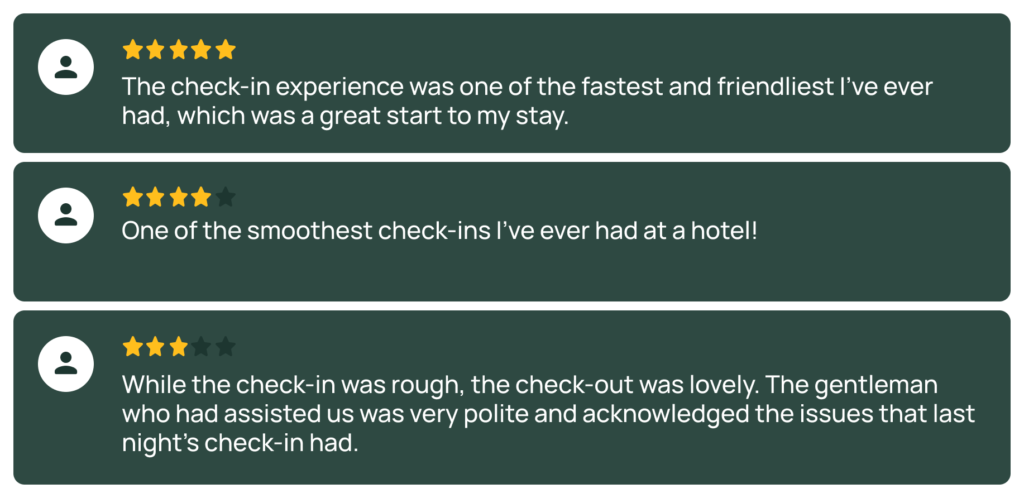
IHG’s check-in experience was the most consistently praised in the dataset. Front desk teams are described as personable, efficient, and proactive. When things go wrong, the warmth of the staff still tends to soften the frustration.
Hilton
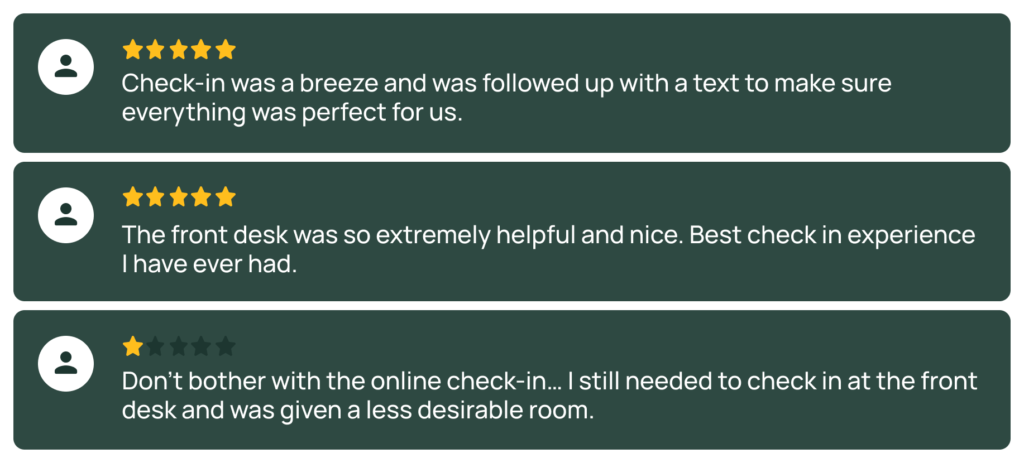
Strong individual staff moments and genuine digital convenience drive positive sentiment. Long lines, confusing policies, and some rude front desk interactions are the recurring weak points.
Hyatt
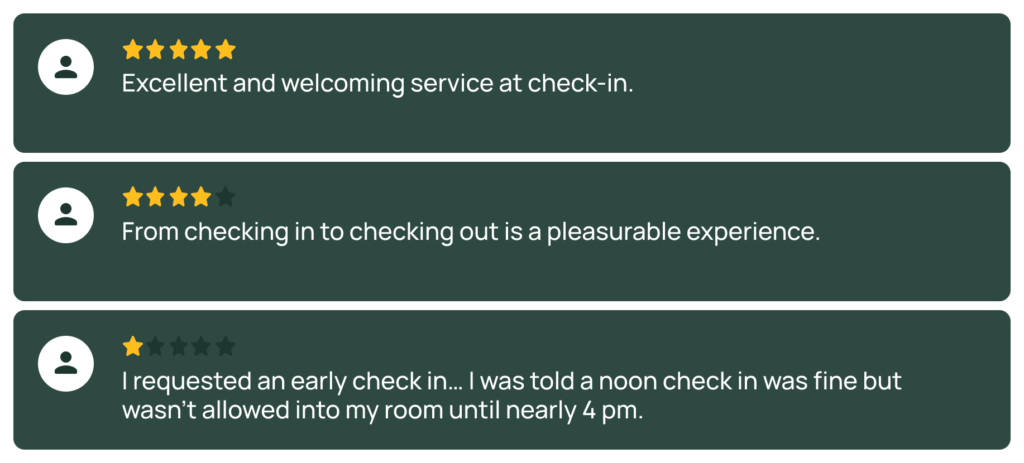
Guests arrive with high expectations and are more likely to encounter delays, rigid policies, and a lack of status acknowledgment. The physical environment often impresses; the arrival process at times doesn’t.
2026 Strategy
2. Digital Check-In: Convenience or Risk?
Mobile app check-in, digital keys, and room-ready notifications are now standard features across all three brands. When digital check-in works, guests love it — and across all three brands, many say it does.
Hilton guests frequently describing app-based check-in and digital keys as easy, quick, and a genuine relief after a long travel day. IHG guests also praise fast, seamless arrivals, with positive sentiment driven as much by supportive staff as by the technology itself. When a welcoming front desk team reinforces the digital experience, the result is one of the smoothest arrivals in the dataset.
Hyatt guests are equally enthusiastic about the potential — app check-in, room-ready alerts, and mobile access all resonate strongly with the brand’s tech-forward guests.
By the Numbers: Digital Check-in
The scores below represent average sentiment ratings assigned to guest reviews mentioning app check-in, digital keys, and mobile room access, analyzed across all three brands on a scale of 1–5.
Digital Check-in
Digital Opportunities for Each Brand
IHG
IHG’s digital check-in success is closely tied to its biggest strength: its people. When front desk teams are staffed and empowered to support the digital experience, IHG delivers some of the smoothest arrivals across all three brands. Consistent staff training around digital tools is the clearest path to making that the norm everywhere.
Hilton
The foundation is strong. Guests already see digital check-in as a genuine convenience. Ensuring app room selections are honored and that mobile check-in fully replaces the desk queue — rather than running parallel to it — would convert satisfied guests into enthusiastic ones.
Hyatt
Guests are ready to embrace digital check-in fully. Improving mobile key reliability, ensuring room-ready notifications are accurate, and aligning early check-in communication between the app and front desk would meaningfully close the gap between guest expectations and on-property experience.
2026 Strategy
3. Loyalty Programs: Big Promises, Big Expectations
Of all the categories in this analysis, loyalty programs generate the most emotionally charged reviews — and the widest variation between brands. That’s partly because loyalty programs carry an implicit contract: stay with us, and we’ll take care of you.
Hilton Honors is one of the largest loyalty programs in the industry — which makes its score the most striking finding in this dataset. Its scale shows in the reviews: when it works, it feels personal, with name recognition, small in-room touches, and occasional upgrades. But consistency is the challenge. Guests frequently describe benefits that feel uneven or less generous than expected, with perks like upgrades or flexibility not always delivered.
World of Hyatt has a strong reputation among loyalty enthusiasts — and the reviews reflect genuine appreciation when the program delivers. Suite upgrades, meaningful recognition, and well-executed perks generate some of the most enthusiastic loyalty mentions in the dataset. But guests also describe dynamic pricing that erodes point value, paid add-ons that feel at odds with elite status, and little flexibility when something goes wrong.
IHG One Rewards leads the group because guests consistently describe getting what the program promises: late checkout honored, points applied correctly, recognition at arrival that feels genuine. The frustrations that do appear — staff who make members justify their benefits, or perks that exist in the app but don’t materialize at the desk — read more as property-level execution issues than fundamental program flaws.
of Hyatt guests mention free breakfast or restaurant discounts
of IHG guests mention personal recognition at check-in
of Hilton guests mention in room treats, bottled water, or small gifts
By the Numbers: Loyalty Programs
The scores below represent average sentiment ratings assigned to guest reviews mentioning loyalty status, benefits, and member recognition, analyzed across all three brands on a scale of 1–5.
Loyalty Programs
What Guests Value and Don’t Value About Each Loyalty Program
IHG
Guests most value:
- Personal recognition at check-in
- Clear explanation of benefits
- Late checkout
- Bonus points or credits
- Quick, fair handling of benefits
What weakens perceived value:
- Staff making members feel like they have to justify their status
- Benefits that exist on paper but do not feel meaningful in practice
Hilton
Guests most value:
- Being greeted by name
- Room upgrades
- In-room treats, bottled water, or small gifts
- Food and beverage credits
- Status-based consideration that feels personal
What weakens perceived value:
- Extra charges that ignore elite status
- Missing flexibility
- Benefits that feel less generous than expected
Hyatt
Guests most value:
- Suite and room upgrades
- Free breakfast or restaurant discounts
- Lounge access or welcome extras
- Staff recognition that feels sincere
What weakens perceived value:
- Dynamic pricing
- Paid early check-in
- Add-on charges that make loyalty feel transactional
2026 Strategy
Turn Feedback Into an Advantage
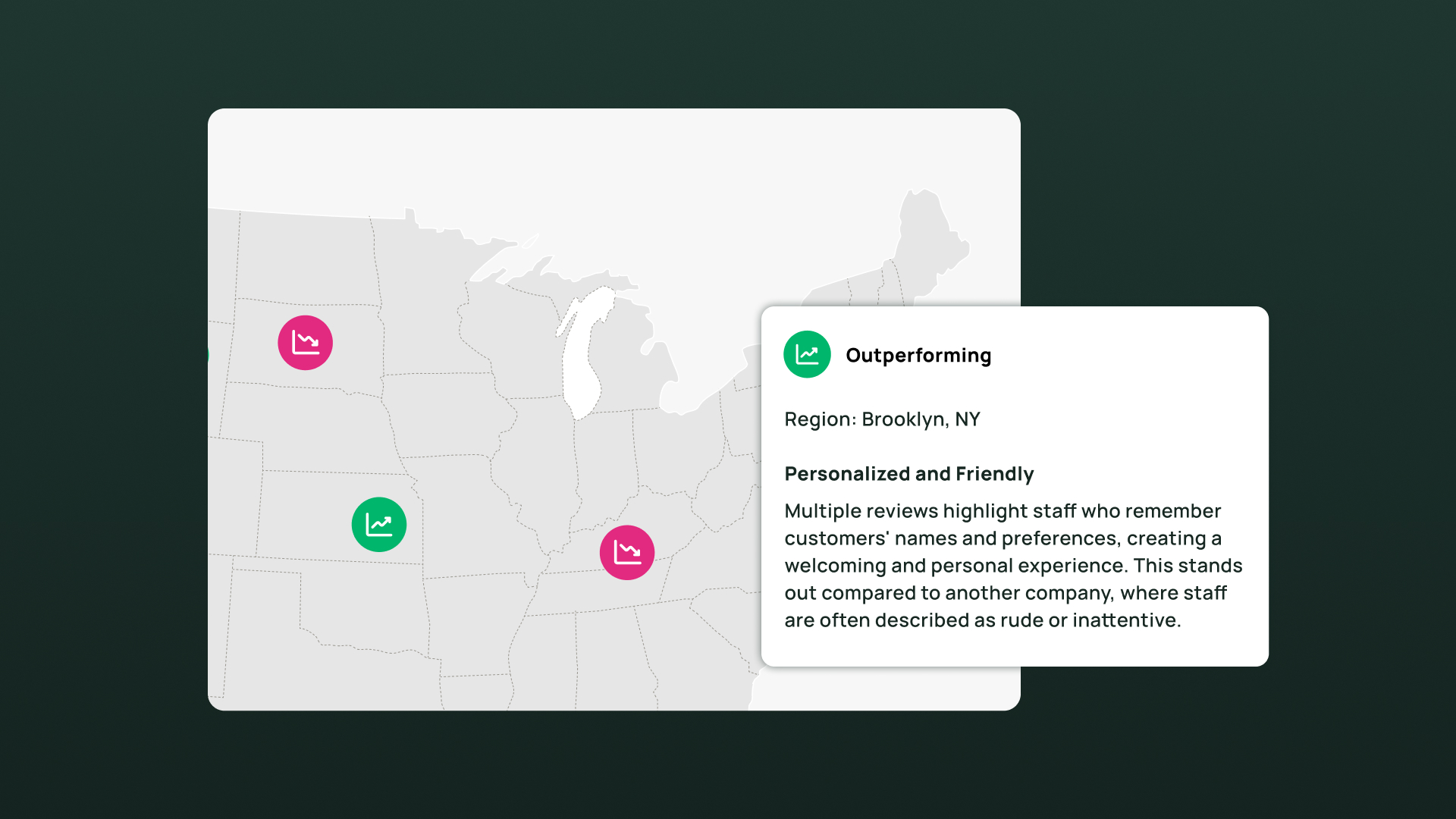
Understand what guests are saying about your brand — and your competitors. This report was built using Alchemer’s Pulse Ai and Competitive Intelligence features to analyze real guest reviews at scale. The same tools are available to your team.
Pulse Ai
Competitive Intelligence
4. Amenities: Where Loyalty is Won or Lost
Across all three brands, amenities perform well in reviews. But there are meaningful differences in what guests are responding to — and what it signals about each brand’s positioning.
Amenities
What Reviews Reveal For Each Brand
IHG
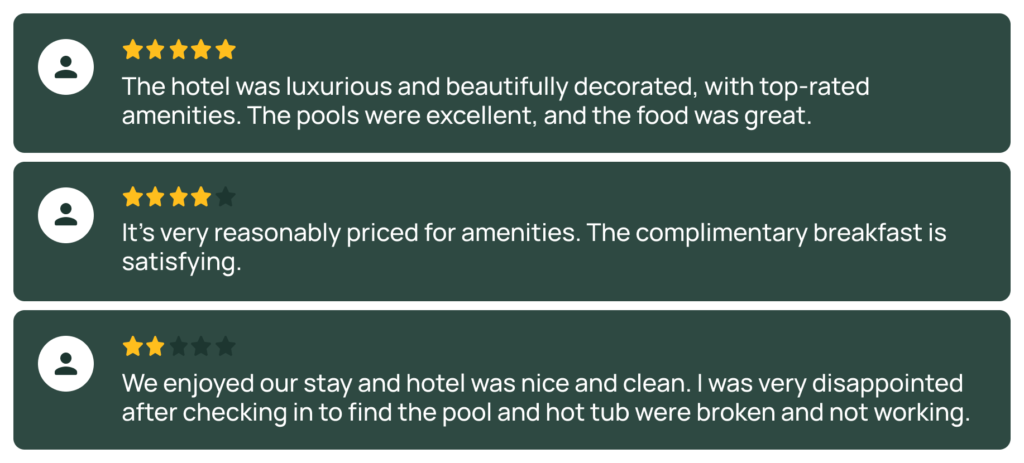
IHG leads on amenities not because its properties are necessarily the most luxurious, but because guests consistently get what they expect: clean, comfortable rooms, reliable in-room basics, free breakfast, and functional fitness and pool facilities. The amenity experience feels easy and complete with nearly 36% of reviews mentioning amenities.
Hilton
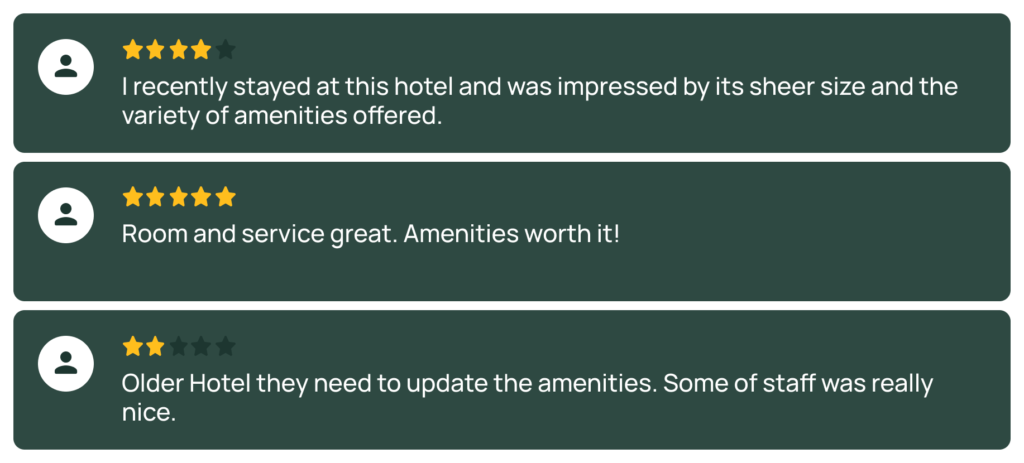
Hilton earns strong marks when guests evaluate the hotel as a place to relax and recharge — pools, outdoor spaces, lobby environments, and complimentary breakfast are frequently praised. 26% of Hilton reviews mention amenities and their spacious suites and rooftop spaces generate some of the most enthusiastic amenity reviews in the Hilton dataset.
Hyatt
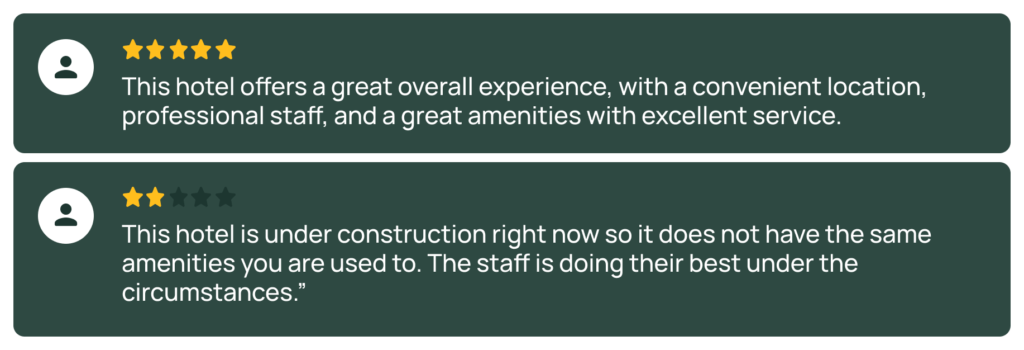
Hyatt’s physical product is genuinely impressive with 24% of guests mentioning amenities in their reviews. Pools, hot tubs, saunas, lounges, fitness centers, and food offerings are all frequently highlighted as upscale and well-appointed. But Hyatt’s amenity score is the lowest of the three brands — and the reason is revealing.
When the physical environment signals luxury and the service doesn’t match, the contrast becomes the review. Hyatt guests aren’t complaining that the amenities are bad. They’re saying the amenities are good and the experience around them is inconsistent.
By the Numbers: Amenities
The scores below represent average sentiment ratings assigned to guest reviews mentioning on-property amenities — including rooms, fitness facilities, pools, and food and beverage — analyzed across all three brands on a scale of 1–5.
2026 Strategy
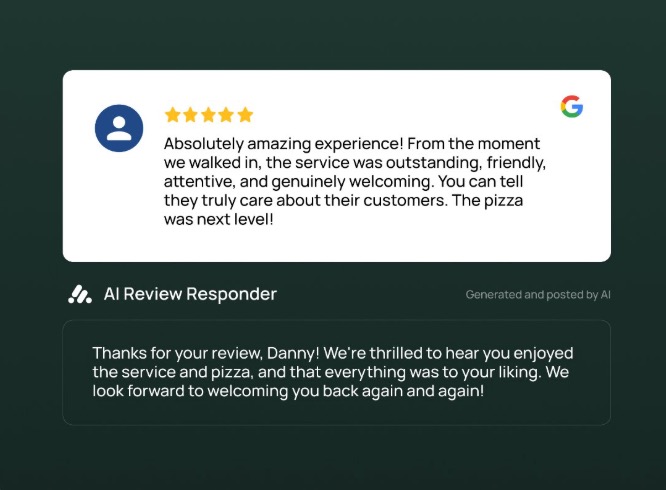
Respond to Reviews at Scale
Easily manage and respond to guest reviews across all your properties with Alchemer’s AI Auto-Responder. Use smart triggers like star ratings, review content, and sensitive-topic detection to send timely, on-brand replies that reflect your hotel’s voice. Customize rules by location and platform, while AI-powered responses pull in relevant guest details to keep every interaction personal.
Built-in safeguards help you stay compliant by flagging or avoiding sensitive topics, so your team can scale guest engagement without sacrificing quality or control.
5. Staff Service: What Guests Remember Most
If there is one finding in this analysis that cuts across every section and every brand, it is this: staff behavior drives more review sentiment than any other single factor. More than the room. More than amenities. More than check-in.
of IHG 5-star reviews
of Hilton 5-star reviews
of Hyatt 5-star reviews
By the Numbers: Staff Service
The scores below represent average sentiment ratings assigned to guest reviews mentioning staff interactions, service quality, and service recovery, analyzed across all three brands on a scale of 1–5.
Staff Service
What Reviews Reveal For Each Brand
IHG
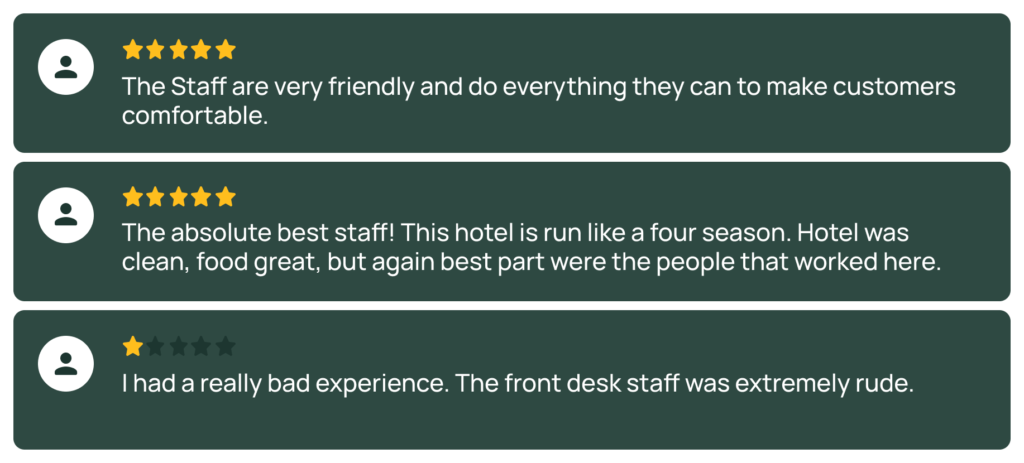
IHG’s staff experience is its most durable competitive advantage. Guests describe front desk teams as warm, professional, and empathetic. Service recovery moments — when something goes wrong and a staff member fixes it with genuine care — appear consistently in IHG’s strongest reviews. The brand’s overall performance in this analysis tracks closely with its staff scores. The two are not coincidental.
Hilton
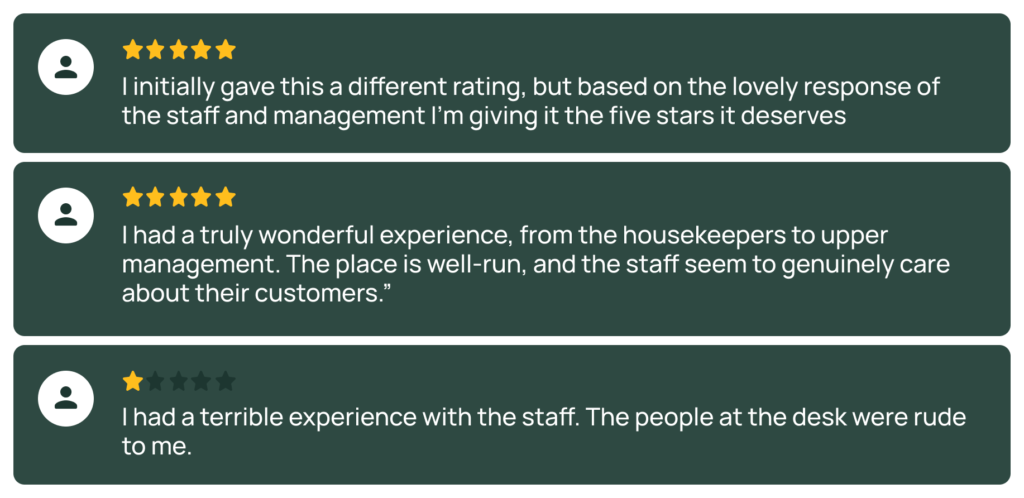
Hilton also earns strong individual staff recognition. Named employee shoutouts appear frequently in positive reviews, suggesting that exceptional individual service is happening — but not consistently enough to close the gap with IHG. Complaints about dismissive or disrespectful treatment appear more often in Hilton’s data than in the other two brands.
Hyatt
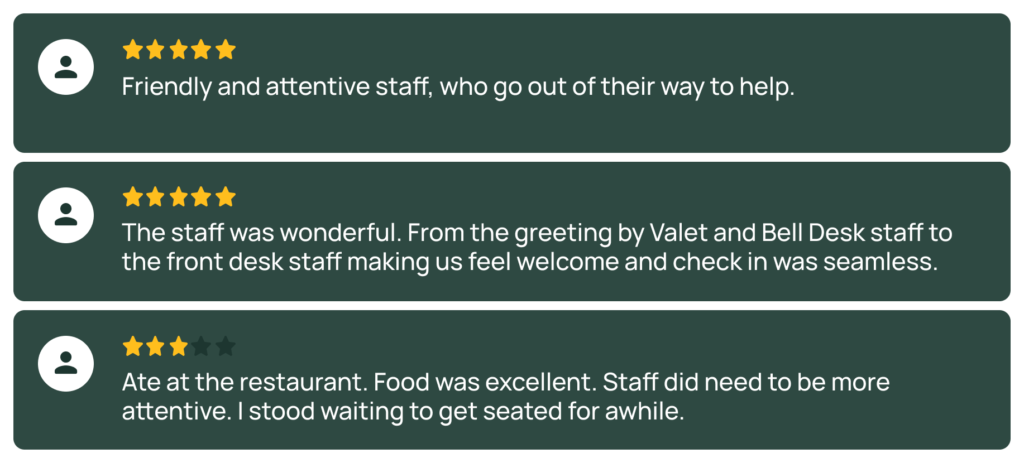
Hyatt’s staff reviews show a wide range of guest experiences. Many guests consistently highlight kind, accommodating employees who go above and beyond to deliver memorable service. At the same time, there are opportunities to improve consistency at the front desk, speed up issue resolution, and elevate service in restaurant and bar settings.
Overall, the brand clearly demonstrates strong service potential—refining consistency across touchpoints could further strengthen its position as a premium hospitality experience.
2026 Strategy
Closing Thoughts
Success in 2026 will belong to hotel brands that respect two things above all else: the guest’s expectations and their trust.
Today’s travelers are more informed and more vocal than ever. They are choosing hotels — and staying loyal to them — based on whether the experience consistently matches the promise. And when it doesn’t, they say so publicly.
At the same time, they are less willing to tolerate friction. If check-in is complicated, loyalty benefits are hard to access, or staff fall short of the brand’s positioning, guests notice — and the reviews reflect it.
Successful hotel guest experiences are built on:
- Delivering on arrival by ensuring digital tools and front desk operations are aligned and ready before the guest walks through the door
- Honoring loyalty in the moment by training property teams to recognize and reward members in ways that feel personal, not procedural
- Matching physical product with service quality so that premium spaces are supported by premium hospitality
- Empowering staff to be the defining factor in the guest experience — because they consistently are
- Closing the expectation gap by ensuring brand positioning reflects what properties can reliably deliver at scale
None of these are one-time fixes. They require ongoing visibility into what guests are actually saying — across every property, every stay, and every review platform.
That’s where the right feedback and insight engine becomes essential.
Alchemer Has the Tools To Help
Omnichannel Feedback Collection
Guest feedback doesn’t happen in one place — and your ability to capture it shouldn’t either. Collect real-time feedback across digital touchpoints, in-stay surveys, and post-checkout communications so you can identify friction in the moment and resolve it before it affects the next guest.
Listings, Reviews and Reputation Management
Guests are talking publicly about their hotel experiences — from loyalty benefits that didn’t materialize to check-in lines that shouldn’t exist. Monitor and respond to guest feedback across Google, Booking.com, and other platforms to protect brand perception and identify systemic issues across locations.
When guests are openly comparing your program to competitors in public reviews, reputation management isn’t optional. It’s a retention strategy
Digital Experience
Your mobile app is the front door of your loyalty program and often the first point of failure when digital check-in breaks down. Capture in-app feedback at key moments — room selection, key activation, check-in confirmation — so you know exactly where the guest experience is falling short before it shows up in a one-star review.
Related Resources
Transform Feedback into Exceptional Experiences
See how Alchemer gives you the feedback tools to improve operations, engage employees, and deliver standout guest experiences.
Learn More

The Hospitality Guide to Turning Feedback Into 5-Star Results
This guide explains how hospitality brands can collect, unify, and act on guest feedback across multiple channels to improve experiences and strengthen reputation.
Read the report

1. 92% of guests read reviews before booking a hotel Nguyen, R. (2025). Do reviews still matter for hotels and accommodations in 2025? Heads on Pillows. https://headsonpillows.com/do-reviews-still-matter-for-hotels-accommodations/
2. 48% of guests leave a review after a bad experience Gitnux. (2025). Customer experience in the hotel industry statistics: Market data report 2026. https://gitnux.org/customer-experience-in-the-hotel-industry-statistics/
3. 86% of guests would pay more for a superior experience Gitnux. (2025). Customer experience in the hotel industry statistics: Market data report 2026. https://gitnux.org/customer-experience-in-the-hotel-industry-statistics/
Understand how guests across three major hotel brands — Hyatt, Hilton, and IHG — are experiencing the moments that matter most across key categories: arrival and check-in, loyalty programs, amenities, and staff service.