Multi-Location SEO Software for Enterprise and Franchise Brands
Multi-location SEO is the practice of optimizing search visibility for businesses that operate dozens, hundreds, or thousands of locations — across Google Business Profiles, local listings, maps, reviews, and location-specific landing pages.
Whether you're managing 50 locations or 5,000, Alchemer helps multi-location brands rank higher in local search, capture more foot traffic and online conversions, and turn local SEO into a measurable growth lever.
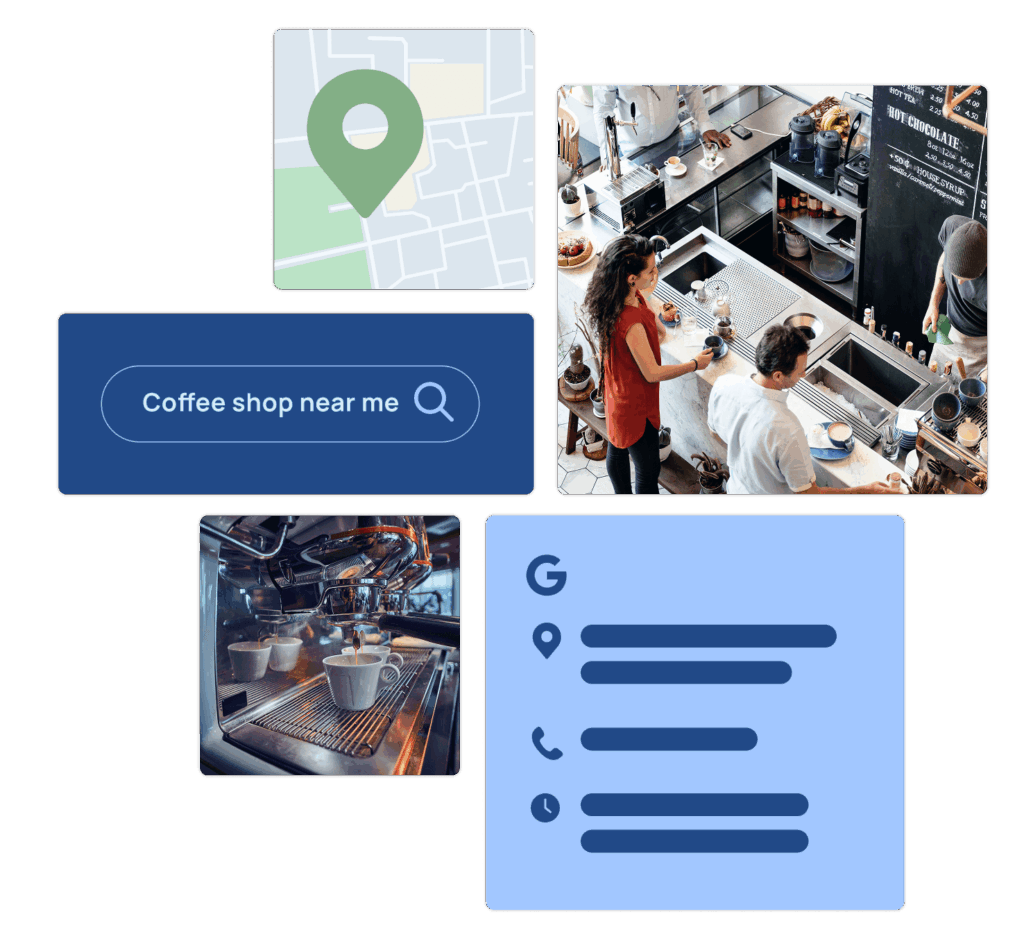

Why Multi-location SEO Matters
For multi-location brands, local search is the front door. Roughly 46% of all Google searches have local intent, and the vast majority of those searches turn into a visit, a call, or a conversion within 24 hours. And while Gartner predicts traditional search engine volume will drop 25% by 2026 as AI erodes general query traffic, local search remains one of the most defensible channels left — high intent, high conversion, and still won on the ground. If your locations aren’t ranking in the local pack and on maps, you’re handing customers to the competitor that is.
The brands winning in crowded local markets treat SEO as an operational responsibility. One that runs across every location, every directory through local listings management, and every review site, every day. They know which locations are ranking, which are slipping, and which themes are hurting performance before it shows up in the P&L.
A unified multi-location SEO platform gives every team a single source of truth for local search performance:
Marketing
- Track brand visibility across every market and region
- Measure how listings accuracy and review performance shift local rank
- Tie campaign spend to local search lift and conversions
Operations and Multi-location Leaders
- Benchmark every location against peers in real time
- Spot underperforming locations before they drag down the network
- Turn local SEO into a measurable growth lever, not a cost center
Regional and field marketing teams
- Push branded, localized content to every location at once
- Coordinate local campaigns without losing brand consistency
- See which locations need attention this week, not next quarter
Franchise operations and field teams
- Give franchisees and local managers clear ownership
- Maintain brand standards across every Google Business Profile
- Connect local performance to coaching, training, and operational change
What is Multi-location SEO
Multi-location SEO is local search optimization at scale — the work of ranking, being found, and being chosen across every location your brand operates. It draws on the same fundamentals as traditional SEO (relevance, authority, content, technical health), but the unit of measurement shifts. Instead of optimizing one website for one set of keywords, you’re optimizing hundreds or thousands of location-specific search experiences across:
- Google Business Profile (GBP) — the single biggest driver of local pack and Google Maps visibility, with location-level signals like categories, attributes, photos, posts, hours, services, and reviews
- Local listings and citations — your business information (NAP: name, address, phone) syndicated accurately across Apple Maps, Yelp, Facebook, Bing, and 200+ directories and aggregators
- Local landing pages — individual, optimized pages on your website for every location, with location-specific content, schema, and conversion paths
- Reviews and ratings — review volume, average rating, response rate, and recency, all of which Google uses as ranking and trust signals
- On-page local SEO — title tags, headings, schema markup, internal linking, and city/neighborhood relevance signals
- Mobile and voice search — most local searches happen on a phone, and increasingly through voice assistants and AI search
In Simple Terms
Multi-location SEO helps businesses with multiple physical locations appear in Google Maps, local search results, and “near me” searches for customers searching nearby. Instead of optimizing one website for one audience, multi-location SEO helps every individual location rank in its own market — through accurate listings, optimized Google Business Profiles, local landing pages, and strong customer reviews.

Why Multi-Location Brands Struggle with Local Search Visibility
Multi-location SEO at one location is straightforward. Multi-location SEO across hundreds or thousands of locations is a fundamentally different problem — one most platforms aren’t built to solve.
The challenge isn’t just volume. It’s that every location competes in its own local market, with its own customers, competitors, and signals. A network-wide visibility score can hide a region where half the locations have dropped off the map pack. A monthly listings accuracy report can mask the duplicate Google Business Profile a former franchisee created and never deleted. Real local SEO at scale requires visibility, ownership, and accountability at the location level — not just the brand level.
Multi-location SEO programs typically run into five recurring problems:
1. Inconsistent business information across directories
Wrong hours, outdated phone numbers, missing categories, and inconsistent NAP data across directories drag down local rank and frustrate the customers who do find you. Google rewards consistency. Most multi-location brands have hundreds of small inconsistencies they don't know about.
2. Duplicate and unclaimed listings A closed location that's still listed.
A franchisee who created a second Google Business Profile and forgot the password. An aggregator pushing old data into directories you didn't even know existed. Duplicate listings cannibalize rank and confuse customers.
3. Regional ranking inconsistencies
Locations in one region rank in the top three for "near me" queries.Locations 50 miles away don't. Without location-level rank tracking, corporate teams can't see the patterns — let alone fix them.
4. Slow, inconsistent review management
5. No centralized oversight of local performance
The biggest gap in most multi-location SEO programs isn't strategy or budget. It's visibility. Without one platform showing local rank, listings accuracy, review performance, and competitor benchmarks across every location, regional and corporate teams are reacting to problems instead of preventing them.
Features to Look for in Multi-Location SEO Software
Multi-location SEO software is a spectrum, not a category. On one end are basic listings tools. On the other are operational platforms that unify listings, reviews, local pages, social, and AI insights into one system — with the workflows and governance enterprise teams actually need. The mistake mid-market and enterprise teams usually make is buying for today’s location count, not for where the network will be in two years.
Here’s what separates a true multi-location SEO platform from a basic local listings tool:
| Capability | What It Means for Your Local SEO Program |
|---|---|
|
Listings management across 200+ directories |
Bulk updates, scheduled changes, and accuracy reporting across Google, Apple Maps, Yelp, Facebook, Bing, and industry-specific directories — catching errors before they cost you customers. |
|
Google Business Profile integrations |
Native, two-way GBP integration with bulk editing for categories, attributes, hours, photos, posts, services, and Q&A. The deeper the integration, the less manual work at scale. |
|
Local pages for every location |
Optimized, on-brand location pages built and maintained at scale — with local content, schema, embedded reviews, and conversion paths. |
|
Review monitoring and AI-powered response |
Capture and respond to reviews across Google, Yelp, Apple Maps, Facebook, app stores, and industry sites in one inbox, with AI-generated on-brand replies. |
|
Local rank tracking by location and keyword |
Visibility data at the location level, not just the brand level — including map pack, organic, and AI search results. |
|
AI-powered insights |
Theme detection, sentiment analysis, risk flagging, and plain-language Q&A across reviews, social, and feedback at scale. |
|
Workflow automation |
Assign reviews to specific team members, route risk flags, schedule listings updates, and trigger alerts when locations slip below threshold. |
|
Multi-location reporting |
Brand-level rollups with drill-down by region, group, market, and location — and executive dashboards that don’t require manual exports. |
|
Role-based permissions |
Multi-team, multi-brand, multi-region permissions with SSO, audit trails, and franchise-friendly governance. |
|
Scalability and API integrations |
Open APIs and pre-built integrations to CRM, BI, and operations tools — so local SEO data feeds the systems your teams already use. |
Alchemer delivers all of these capabilities in one operational reputation management platform built specifically for multi-location businesses. With the acquisition of Chatmeter, Alchemer is one of the only reputation management platforms that unifies:
Reputation management
Listings
management
Social media management
Structured survey feedback

Multi-Location SEO Tracking and Reporting That Drives Action
You can’t fix what you can’t see. And in multi-location SEO, what you can’t see usually shows up as lost revenue at the locations that can least afford it.
A 4.2-star network-wide rating can hide a cluster of 2-star locations. A 92% listings accuracy score can mask 80 locations with wrong hours. A “strong local visibility” headline can paper over an entire region that fell out of the local pack last quarter. Reporting that lives at the brand level is reporting designed to make the network look fine — not reporting designed to improve it.
A modern multi-location SEO platform does the opposite. It rolls up performance at the brand level so executives have what they need, then drills down — by region, group, market, or individual location — so the people responsible for fixing problems can actually find them.
Here’s what enterprise and franchise SEO teams should expect from local SEO reporting:
- Local rank tracking by location and keyword — see how every location ranks for the keywords that matter in its market, not the corporate keyword set
- Visibility monitoring across the map pack, organic results, and AI search — track share of local voice as search itself changes
- Regional and group-level reporting — for DMAs, franchise territories, regional VPs, and field marketing teams
- Executive dashboards — board-ready views that summarize visibility, listings health, review performance, and competitor share of voice
- Competitor benchmarking — compare every location against local competitors on rankings, reviews, listings completeness, and response activity
- Automated reporting workflows — scheduled scorecards delivered to the right person at the right cadence, without manual exports
- Drill-down from trend to location — a regional manager should be able to click from a “rankings dropped 12%” headline straight to the three locations driving the drop
Multi-Location SEO Use Cases by Industry
Every industry has its own local search dynamics — different intent, different directories, different conversion paths. A modern multi-location SEO platform supports the full range. Below are the most common use cases by industry, and how Alchemer powers each.
- Choose a use case below
Restaurants and QSR
For restaurant chains and quick-service brands, local search is the menu, the map, and the front door. Customers searching “pizza near me” or “open now” are choosing between locations in seconds, based on:
- Google Maps visibility
- Local pack rankings
- Photos
- Hours
- Recent reviews
- Delivery platform availability
Alchemer keeps every location’s GBP optimized, listings accurate across Google, Apple Maps, Yelp, DoorDash, Uber Eats and other directories and reviews monitored and responded to in real time — so high-performing locations stay visible and underperforming ones get attention before they affect sales.

A&W Restaurants, one of America’s iconic fast-food chains with hundreds of US locations and over $330 million in revenue, partnered with Chatmeter (now Alchemer) to drive more foot traffic to its franchised stores. Within four months, A&W boosted local SEO performance, claimed and cleaned listings across every location, and built review participation into the company scorecard — to the point that franchisee performance on the platform now influences whether new locations get approved.
Retail and Multi-Brand Retailers
Retail chains face the toughest local SEO competition — every category, every market, every season. Customers search by:
- Product availability
- Store proximity
- Brand name
- Category intent
- “near me” shopping queries
- Seasonal demand
Alchemer helps retailers manage thousands of locations across regions and banners with:
- Bulk listings updates
- Location-level rank tracking
- Local landing pages that capture both branded and non-branded search
- Competitive benchmarking by region and market
Enterprise retail SEO requires visibility into local rankings, local inventory intent and customer sentiment across thousands of storefronts simultaneously

Brookshire Brothers operates 200+ employee-owned locations across seven brands — grocery stores, gas stations, coffee shops, and pharmacies — spanning Texas and Louisiana. As the chain grew through new locations and brand acquisitions, the team needed to stay competitive in an increasingly online marketplace. With Alchemer, Brookshire Brothers optimized listings across Google, Yelp, and Apple Maps, streamlined review response across every location, and saw a 38%+ increase in page-one Google rankings in a single year.
Healthcare and Multi-Location Practices
Healthcare systems, urgent care chains, and multi-specialty practices live or die by local search. Patients search by:
- Condition
- Specialty
- Insurance
- Provider reputation
- Proximity
- Urgency
Every Google Business Profile has to support all of it. Alchemer’s listings management, GBP optimization, and review monitoring help health systems maintain accuracy across thousands of provider listings and practice location listings while keeping HIPAA-ready governance in place.
Healthcare organizations also need physician SEO, medical local SEO, specialty-level optimization, and accurate provider listings management across healthcare directories and local search platforms.

LaserAway, a leading aesthetic dermatology and beauty services provider, operates clinics nationwide offering laser hair removal, skin rejuvenation, body contouring, and injectables. The team needed to generate more reviews, increase response rates, and convert local visibility into leads across every clinic. By partnering with Alchemer, LaserAway delivered a 62% increase in review volume, a 135% increase in response rate, and a 20–30% boost in organic leads — all within 9 months.
Automotive and Dealer Groups
Dealer groups operate across brands, OEM requirements, and regional markets — with strict guidelines from manufacturers about local pages, branding, and review handling. Alchemer gives dealer groups one platform to manage listings, local pages, reviews, and social across every rooftop while staying inside OEM compliance requirements and franchise standards.
Automotive SEO requires balancing dealer SEO performance with manufacturer brand governance, vehicle inventory intent and local search competition across every market.
The platform helps dealer groups:
- Manage dealer citations
- Improve rankings for vehicle and service searches
- Optimize service department local pages
- Benchmark visibility against nearby competitors
- Monitor review sentiment at the location level

Caliber Collision is the largest auto collision repair company in the US, operating 2,000+ centers across 41 states and receiving roughly 12,000 reviews per month. As Caliber expanded into new lines of business and opened hundreds of new locations every year, the team needed an enterprise-grade platform that could scale with them. With Alchemer, Caliber centralized listings, review response, and customer experience signals across every center — turning local SEO and reputation into a competitive advantage at unmatched scale.
Hospitality and Travel
Hotels, resorts, casinos, vacation rental brands and hospitality management compete heavily in Google Maps, Google Travel and location-based mobile search results. Hospitality brands depend on:
- Travel search visibility
- Map pack rankings
- Reviews and ratings
- Mobile booking behavior
- Destination-based search intent
- Direct booking conversions
Alchemer unifies listings, reputation, and competitive intelligence so hospitality brands can see how every property ranks, how reviews compare against local competitors, and where revenue is leaking through bad data or slow response.
Hospitality local SEO requires hotel local SEO optimization, Google Travel optimization, hospitality reputation management and listings accuracy across travel and tourism directories.

With 250+ locations drawing hundreds of reviews a month, the Northland Properties team struggled to spot major themes in guest feedback and respond fast enough. With Alchemer, Northland used AI to surface trends by location, region, and brand, delivering an 85%% response rate and a 4.5 average rating across every property — and turning guest feedback into more bookings, repeat stays, and lasting loyalty.
Financial Services
Banks, credit unions, and wealth advisors operate across branches and offices with very different local profiles. Customers frequently search for:
- “banks near me”
- Local financial advisors
- Mortgage lenders nearby
- ATM availability
- Brand reviews
Alchemer helps financial brands keep listings accurate across every branch, monitor reviews on regulated terms, and surface the local content and trust signals that drive appointments — within the security and compliance posture financial services require.
Financial services local SEO requires secure listings governance, regulated review workflows, branch-level visibility tracking and reputation monitoring at scale.

A well-known national bank turned to Alchemer to elevate its online reputation, Google rankings, listings accuracy, and omnichannel customer experience across hundreds of branch locations. The team refreshed an outdated review and reputation strategy, improved listings accuracy at the branch level, and built a review generation and response program that lifted local search rankings and trust signals across the network — proving that local SEO is a measurable growth channel even in regulated industries.
Comparing the Top Multi-Location SEO Platforms
Choosing the best multi-location SEO software depends on how many locations you operate, how much operational depth your teams need, and how unified you want listings, reviews, local pages, and reporting to be. Most platforms look similar on the surface but reflect fundamentally different approaches to scale, governance, and execution.
Multi-location SEO platforms typically take one of three approaches:
- Listings-first model: Strong on directory syndication and data accuracy, lighter on operational reputation work or local pages. Best for brands focused on data hygiene.
- Reputation-first model: Strong on review monitoring and response, lighter on listings depth or local rank tracking. Best for brands prioritizing review velocity.
- Operational model: Treats local SEO as a unified discipline — listings, local pages, reputation, social, competitive intelligence, and AI insights in one platform, with clear ownership and measurable impact at the location level. Built for multi-location enterprises and franchise networks.

| Category | Alchemer | BirdEye | Yext | SOCi | Uberall |
|---|---|---|---|---|---|
|
Core Focus |
Operational reputation management with AI-powered insights and location-level accountability |
Social media and reputation management for smaller businesses |
Reputation management with sentiment analysis, but prone to gaps |
Social-first platform with reputation management capabilities |
Reputation management within broader location marketing initiatives |
|
Day-to-Day Workflow |
Identify issues, assign ownership, track resolution across teams |
Automates review requests and centralizes responses, with limited operational oversight |
Reputation monitoring and response included within digital presence management |
Response workflows driven by basic AI agents |
Response management aligned to marketing initiatives |
|
Insight & Reporting Depth |
AI Review Signals delivers risk signals, competitive intelligence, and actionable operational insights tied directly to performance |
Word-cloud and keyword-based sentiment summaries, without structured thematic insight |
Customizable reporting with a steeper learning curve |
Reporting centered on social and reputation activity |
Reputation reporting included as part of broader marketing platform |
|
Location-Level Visibility |
Detailed location-level visibility into performance and risk |
Location and brand visibility |
Primarily brand-level visibility |
Brand and location views centered on automation activity |
Brand-level visibility |
|
Listings Integration |
Native — listings, reviews, social, and surveys in one platform |
Available, with separate workflows |
Strong listings focus, less depth on reputation operations |
Limited listings depth |
Listings included in broader marketing platform |
|
Support Model |
Dedicated CSM, listings specialists, hands-on onboarding |
Standard support; response times vary by plan |
Tier-based support; enhanced support varies by plan |
Geared toward social content and automated responses |
General platform support model |
How Alchemer Helps Multi-Location Brands Win in Local Search
Listings management across 200+ directories
Keep every location optimized for traditional search, local search, and AI-powered search. Bulk updates, scheduled changes, duplicate detection, and accuracy reporting catch errors before they cost you customers. Over 1.2 million listings are managed via Alchemer.
Local pages built for traffic and conversion
Purpose-built location pages that capture both branded and non-branded search, with local content, schema markup, embedded reviews, and conversion paths. Hands-on optimization service keeps pages aligned with how search itself is evolving.
AI-powered review response and risk detection
Generate on-brand review responses across every platform — automatically or with quick human review — so locations respond consistently without losing local voice. AI Review Signals flags reviews mentioning safety, harassment, discrimination, or other high-risk issues and routes them to the right person within minutes. Alchemer customers have used AI to respond to over 2.8 million customer reviews.
Local rank tracking and visibility reporting
Track local rankings by location and keyword, with map pack, organic, and AI search visibility in one view. Drill from network-level trends straight to the locations driving them.
Competitive intelligence at the location level
Benchmark every location against its local competitors on rankings, reviews, listings completeness, and response activity — so regional teams can spot share-of-voice gaps and act on them. To date, Alchemer customers have used Competitive Intelligence to monitor 957,000 competitor locations.
Survey and review unification
Blend solicited feedback (CSAT, NPS, CES) with unsolicited feedback (reviews, social, listings signals) for a complete picture of customer sentiment and operational health at every location.










What Customers Are Saying About Alchemer's Multi-Location SEO Software



See how Alchemer helps multi-location brands rank higher in local search, manage listings and reviews at scale, and turn local SEO into a measurable growth lever.
Related Resources

How to use AI to respond to every review without the risk
In this 30-min session, we’ll show how Alchemer’s new AI Auto-Responder is built differently...

Listing Management 101
This blog breaks down the most common questions about listings management, so multi-location brands...

How to Maximize your Google Business Profile Traffic in the Age of AI
AI is changing the way people search and that means it’s time to rethink how you manage your Google Business Profiles (GBP)...
Multi-location SEO is the practice of optimizing search visibility for businesses that operate multiple physical locations — across Google Business Profiles, local listings, maps, reviews, and location-specific landing pages. It includes managing listings accuracy across hundreds of directories, optimizing each location’s Google Business Profile, tracking local rankings at the location level, and managing reviews and reputation across the network.
Traditional SEO optimizes one website for one set of keywords. Multi-location SEO optimizes hundreds or thousands of location-specific search experiences — across listings, GBP, local pages, and reviews — while maintaining brand consistency at scale. The unit of measurement shifts from “the brand” to “every location in every market.”
Enterprise local SEO refers to local search optimization for large, multi-location organizations — typically with the governance, security, integration, and reporting requirements that come with operating at scale. It includes role-based permissions, multi-team workflows, SSO, audit trails, and reporting designed for executives, regional leaders, and field marketing teams.
Franchise SEO is local SEO designed for franchise networks, where corporate brands enforce standards and franchisees own the day-to-day at the location level. Effective franchise SEO platforms give corporate teams centralized control over brand consistency, listings, and reporting — while giving franchisees the visibility and tools to win in their local markets.
Look for listings management across 200+ directories, native Google Business Profile integration, local pages built for traffic and conversion, review monitoring with AI-powered response, local rank tracking by location and keyword, AI-powered insights and risk detection, workflow automation, multi-location reporting with drill-down, role-based permissions, and open APIs. Enterprise teams should also prioritize SOC 2 Type II certification, GDPR compliance, and a support model built for scale.
Local search visibility directly drives foot traffic, calls, direction requests, appointments, and conversions. Locations that rank in the local pack capture the majority of nearby clicks for any given query. Accurate listings reduce friction. Active review programs build trust and improve click-through. Together, these signals compound into measurable lift in per-location revenue and lower customer acquisition costs.
Listings management keeps business information (name, address, phone, hours, categories, photos) accurate across directories like Google, Apple Maps, Yelp, and Bing. Reputation management monitors and responds to what customers say in reviews and social. Both shape local search performance and customer trust — and the strongest platforms unify them rather than treating them as separate products.
AI automates review response at scale with on-brand replies, categorizes reviews by sentiment and theme, flags risky reviews for immediate action, and surfaces emerging trends across thousands of locations before they show up in summary metrics. Pulse AI, purpose-built for multi-location brands, also answers plain-language questions about customer feedback and competitive performance — so non-analysts can get insight without building reports.
eview volume, average rating, response rate, and recency are all signals Google uses to rank locations in local pack and Maps results. Brands with active review programs — generating new reviews and responding to every one — consistently outrank brands that treat reviews passively.
Alchemer is built for multi-location brands that treat local SEO as an operational responsibility — with location-level visibility, AI-powered insights, integrated listings and local pages, and survey + review unification. Yext leads on listings distribution but is less operational on reputation. SOCi is social-first. Birdeye is geared toward smaller businesses prioritizing review generation. Alchemer is one of the only platforms unifying listings, local pages, reputation, social, competitive intelligence, and surveys in a single operational system.